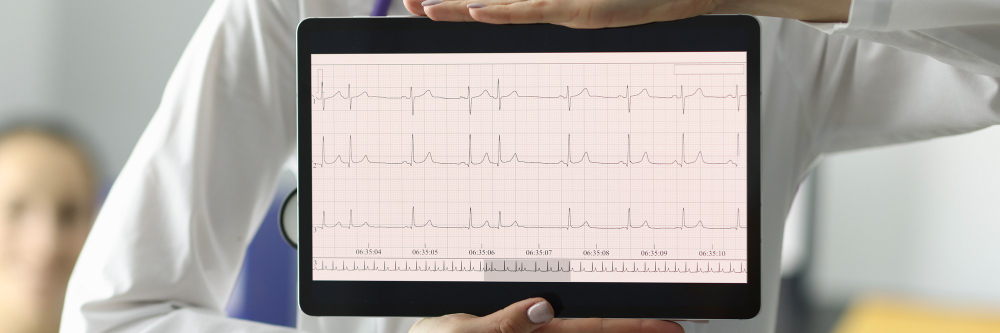
You went in worried. Maybe your chest fluttered, or you felt dizzy out of nowhere. The doctor ran an EKG/ECG, said it looked normal, and sent you home.
But the strange feelings keep coming back.
That gap between a “normal” result and how you actually feel is real, and it matters. A standard EKG/ECG captures only a few seconds of your heart’s activity. Symptoms that come and go often slip through unnoticed. That’s why a heart doctor may recommend longer monitoring with a Holter monitor or, in some cases, loop recorder implantation. These tools watch your heart over hours, days, or even years — catching what a single snapshot cannot.
Why One Normal EKG/ECG Isn’t the Whole Story
A resting EKG/ECG is a quick, painless test. It records your heart’s electrical activity at one moment in time.
The problem is timing. If your irregular heartbeat isn’t happening during those few seconds, the test won’t see it. Many arrhythmias are intermittent by nature.
If you’re still searching for answers, our guide on understanding heart palpitations can help you spot symptoms worth reporting to your doctor.
Symptoms That Deserve a Second Look
- Palpitations — a racing, skipping, or thumping heartbeat that comes and goes.
- Fainting or dizziness — brief episodes that a resting test may miss entirely.
- Unexplained fatigue — tiredness that doesn’t match your activity level.
Naming these signs helps your care team choose the right next step.
How Longer Monitoring Fills the Gaps
When one reading isn’t enough, extended monitoring gives your heart doctor a fuller picture. The goal is simple: record your heart while you live your normal life.
The Holter Monitor
A Holter monitor is a small device you wear for 24 to 48 hours, or sometimes longer. It records every heartbeat continuously.
Research shows longer monitoring detects far more irregular rhythms than a short test. According to a health technology assessment published on PMC, extended monitors outperformed the standard 24-hour approach in catching symptoms.
Loop Recorder Implantation
For symptoms that are rare but concerning, loop recorder implantation may be the answer. This tiny device is placed just under the skin during a minor procedure and can monitor your heart for up to three years.
A loop recorder can find brief or occasional irregular heartbeats that other devices miss. It sends data to your care team automatically, even while you sleep.
Finding the Right Care and Peace of Mind
Waiting for answers is stressful. You deserve a clear path forward and a team that listens.
The best cardiologist won’t stop at a single normal result if your symptoms persist. A thoughtful heart doctor looks at the full picture — your history, your symptoms, and the right monitoring tools. Choosing the best cardiologist means choosing someone who takes your concerns seriously.
You don’t have to manage this alone. Home-based monitoring and follow-up care can bring expert support right to you, easing both the medical and emotional weight.
If your EKG/ECG came back normal but you still feel that something is off, trust that instinct. Reach out to our cardiology care team today by calling + 1-718-367-2555 or visiting us at 1797 Pitkin Avenue, Brooklyn, NY 11212 to explore extended monitoring options and get the answers your heart deserves.