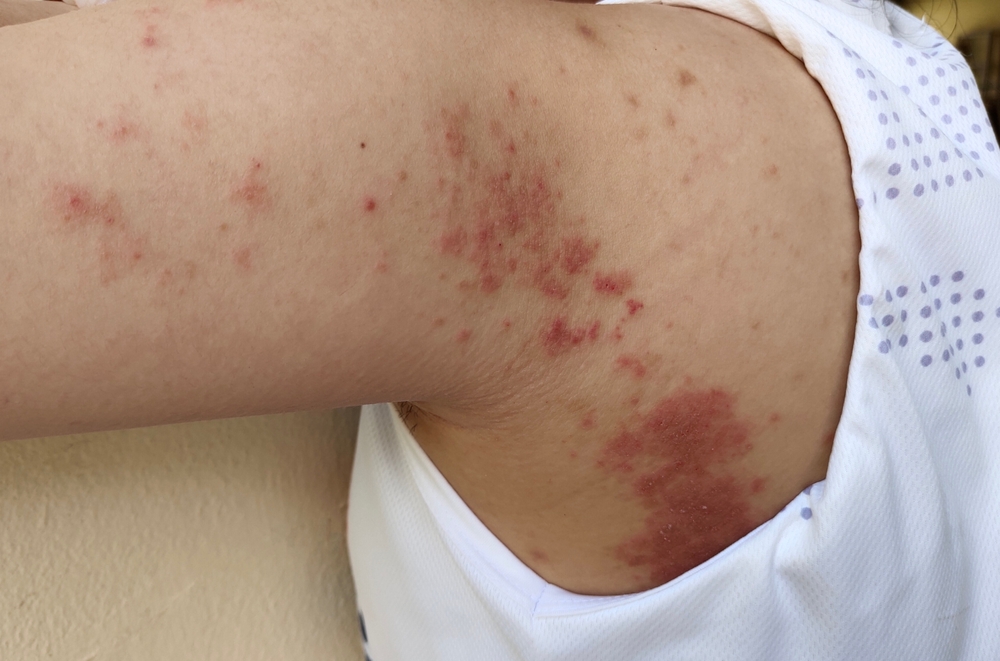
Sudden chronic hives often appear when ongoing stress triggers histamine release in the skin, leading to raised, itchy welts that come and go for weeks or longer. An allergist can rule out other causes and help you find lasting relief. If welts last more than six weeks, it is time to seek care from an immunology clinic in Brooklyn.
Waking up with unexplained welts is unsettling. You check your soap, your laundry detergent, even your pillowcase, looking for an answer that never quite fits. For many people, the real trigger is not a product at all. It is stress. Sudden chronic hives can appear out of nowhere, and stress sparks unexplained welts more often than most people realize. The good news is that this pattern is well documented, and there are clear steps you can take to find relief once you understand what is happening beneath your skin.
What Are Sudden Chronic Hives, and Why Does Stress Trigger Them?
Chronic hives, known medically as chronic urticaria, are welts that last for six weeks or longer, often flaring and fading without warning. When stress is the trigger, your body releases histamine and other chemicals that cause blood vessels near the skin’s surface to leak fluid, forming raised, itchy welts.
The Stress and Skin Connection
Your skin and your nervous system are closely linked. During periods of prolonged stress, your body stays in a heightened state of alert, which can make your immune system more reactive. This is why sudden chronic hives frequently show up during demanding life events, such as a new job, a family crisis, or ongoing sleep loss.
Common Triggers That Overlap With Stress
Stress rarely acts alone. These factors often show up alongside it:
- Poor sleep: Disrupted sleep patterns can heighten inflammation and make welts more likely to appear.
- Illness or infection: A recent cold or infection can prime your immune system to overreact.
- Hormonal shifts: Changes tied to your menstrual cycle or thyroid function can intensify flare-ups.
- Physical exhaustion: Overexertion without enough rest can weaken your skin’s natural resilience.
How Can You Tell If Stress Is Really Behind Your Hives?
Confirming that stress sparks unexplained welts on your body takes more than a hunch. Because chronic hives can also stem from allergies, autoimmune conditions, or hidden sensitivities, a proper evaluation matters.
What an Allergist Looks For
An allergist will review your medical history, ask about your recent stress levels, and may run blood tests to rule out thyroid issues or autoimmune triggers. This step is essential, since sudden chronic hives can sometimes signal an underlying condition that needs separate treatment.
Keeping a Symptom Journal
Tracking your stress levels, sleep, and flare-ups in a simple daily log can help your allergist spot patterns faster. Note when welts appear, how long they last, and what was happening in your day beforehand.
When Should You Visit an Allergist for Chronic Hives?
If your welts last longer than six weeks, return frequently, or interfere with sleep and daily life, it is time to bring in a specialist. Scheduling a visit with an immunology clinic in Brooklyn can help you get answers instead of relying on guesswork. A visit to an immunology clinic in Brooklyn also gives you access to treatments, such as antihistamine therapy or targeted biologics, that go beyond what over-the-counter remedies can offer.
Working with an allergist means you get a plan built around your specific triggers, not a generic list of things to avoid.
You Do Not Have to Live With Unexplained Welts
Sudden chronic hives can feel isolating, especially when there is no obvious cause. You deserve real answers, not another guessing game with creams and antihistamines. Our Allergy team will understand how stress sparks unexplained welts and know how to build a treatment plan that fits your life. Reach out to us today by calling +1-718-367-2555 or visiting us at 1797 Pitkin Avenue, Brooklyn, NY 1121 to schedule a visit and start finding lasting relief.