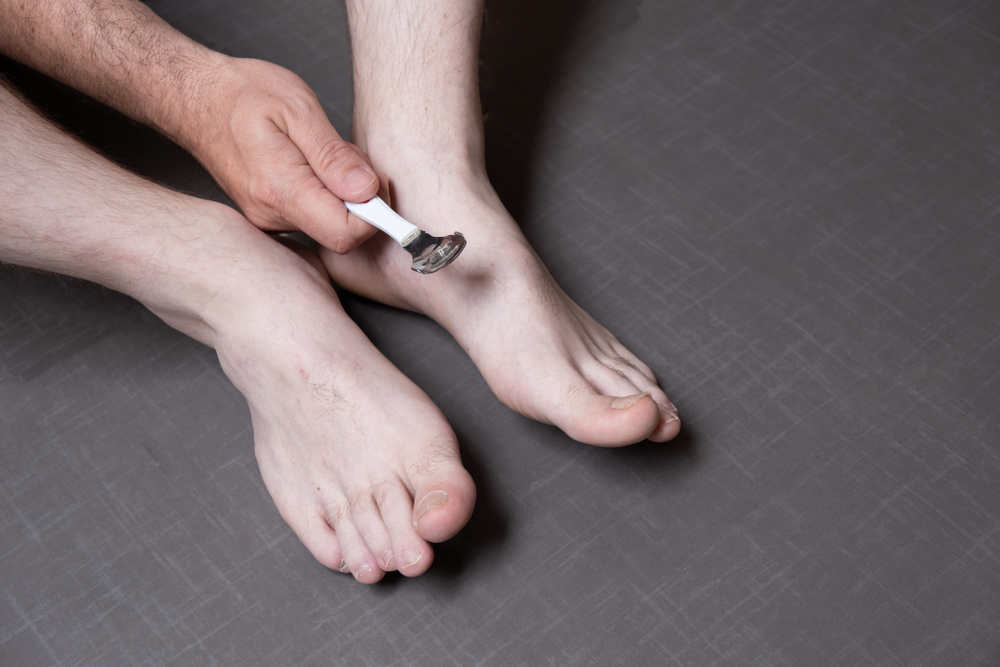
Hard skin on your soles often forms from repeated pressure or friction, and it can develop into stubborn corns over time. Safe filing for stubborn corns means using gentle tools, soaking the skin first, and never cutting too deep. If pain, redness, or bleeding shows up, a podiatrist should take over from here.
Hard skin on the bottom of your feet can sneak up on you. One day your soles feel smooth, and the next, you notice a rough patch that catches on your socks or aches when you walk. This is a common experience, and you are not doing anything wrong. Your feet carry you through every step of your day, and they respond to that pressure by building up protective layers of skin.
The tricky part comes when that protection turns into a problem. A callus is one thing, but a stubborn corn digging into your sole is another. Knowing the difference, and knowing how to file safely, can save you from making things worse.
What Causes Hard Skin on Your Soles?
Hard skin on your soles usually forms because of repeated friction or pressure on the same spot. Walking, standing for long hours, ill-fitting shoes, and even changes in your gait can all contribute. Your skin responds by thickening, which is your body’s way of trying to protect itself.
Certain factors make this more likely:
- Footwear: Shoes that are too tight or too loose create friction points.
- Foot structure: Bunions, hammertoes, or high arches shift pressure to certain areas.
- Activity level: Runners and those who stand for work often see more buildup.
- Age: Skin naturally loses some elasticity over time, making hard patches more common.
How Corns Differ from Calluses
Calluses tend to spread across a wider area and rarely hurt. Corns are smaller, more concentrated, and often have a hard center that presses into deeper tissue. That center is what makes corns so much more painful than calluses, especially on the sole where every step adds pressure.
Safe Filing for Stubborn Corns: What You Need to Know
Safe filing for stubborn corns starts with patience. Your skin needs to be softened before any filing begins, and rushing this step is one of the most common mistakes people make at home.
A pumice stone or foot file is usually enough for mild buildup. Stronger corns may need a few sessions rather than one aggressive attempt. Filing too hard, too often, or on dry skin can lead to bleeding, irritation, or infection, which is the opposite of what you are trying to achieve.
Step-by-Step Filing Tips
- Soak first: Spend 10 to 15 minutes in warm water to soften the hard skin.
- Dry completely: Wet skin files unevenly and can tear.
- File in one direction: Gentle, consistent strokes work better than back-and-forth scrubbing.
- Stop before it hurts: Any discomfort means it is time to pause.
- Moisturize after: A thick foot cream helps prevent the skin from hardening again too quickly.
When to See a Podiatrist
Some corns respond well to at-home care. Others do not, and that is nothing to feel discouraged about. If you notice bleeding, worsening pain, signs of infection, or a corn that keeps coming back no matter how carefully you file it, it is time to bring in a professional.
A podiatrist can safely remove built-up tissue, check for underlying causes like bone structure or gait issues, and recommend padding or orthotics to prevent the problem from returning. This is especially important if you have diabetes or poor circulation, where even small skin injuries can become serious.
You Do Not Have to Manage This Alone
Hard skin on your soles and stubborn corns can feel like a minor annoyance until they start affecting how you walk and move through your day. Gentle, consistent care at home helps many people, but there is no reason to push through pain or repeated flare-ups on your own.
Our podiatry team is here to help you find lasting relief. If home care is not cutting it, reach out to us today by calling +1-718-367-2555 or visiting us at 1797 Pitkin Avenue, Brooklyn, NY 1121 to schedule an evaluation and take the next step toward comfortable, confident steps.