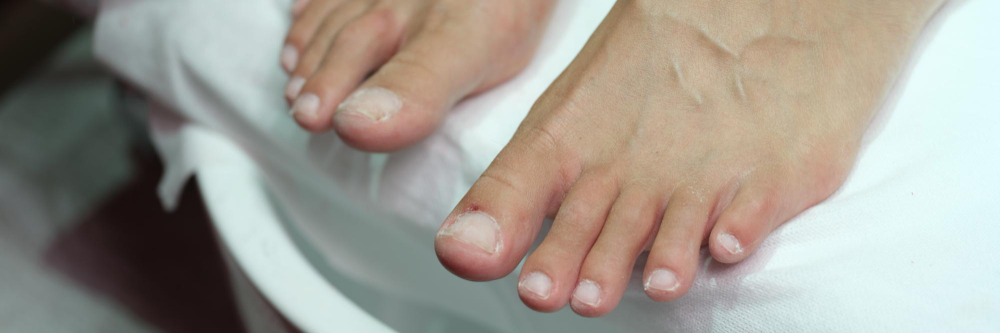
A broken toenail can stop you in your tracks. Maybe you stubbed your toe, dropped something heavy, or noticed the nail lifting away for no clear reason. It hurts, it looks alarming, and you want answers fast.
You are not alone in this worry. Many people struggle to tell the difference between a broken toenail and a damaged toenail, and that confusion can delay proper care. Knowing what you are dealing with helps you heal faster and avoid complications like infection.
This guide walks you through both problems, the treatment each one needs, and a realistic regrowth timeline. When your nail needs more than home care, we will show you exactly when to reach out for help.
Broken Toenail vs. Damaged Toenail: Knowing the Difference
The words sound similar, but the problems are not the same. Getting this right matters for treatment.
A broken toenail usually means a sudden crack, split, or tear, often from an injury. A damaged toenail describes ongoing harm from pressure, illness, or infection, and it may develop slowly over weeks.
Here is a simple way to tell them apart:
- Broken toenail: A visible crack or split, often with pain, from a single event like stubbing your toe or dropping an object.
- Damaged toenail: Thickening, discoloration, crumbling edges, or lifting that builds up gradually. This can point to fungus or repeated trauma.
If you are unsure which one you have, our at-home foot care visits let a professional assess the nail without you leaving the house.
How to Treat a Broken or Damaged Toenail
Treatment depends on the cause and how deep the harm goes. Start gently, and watch for signs you need expert care.
Home Care Steps
For a minor broken toenail, you can often manage it at home:
- Clean the area with mild soap and warm water to lower infection risk.
- Trim carefully to remove loose, snagging edges. Use clean clippers.
- Cover the nail with a bandage if it catches on socks or shoes.
- Ease the pain with a cold compress and an over-the-counter pain reliever.
Keep the toe dry and protected while it mends. Watch for redness, swelling, or pus.
When Fungus Is the Cause
A damaged toenail that turns yellow, thick, or brittle may signal a fungal infection. This will not clear up on its own.
Effective toenail fungus treatment often includes antifungal creams, medicated nail lacquer, or prescription oral medication. A podiatrist can confirm the diagnosis and choose the right approach. Our guide on preventing foot infections shares simple daily habits that lower your risk.
Toenail Regrowth Timeline: What to Expect
Nails grow slowly, so patience matters here. A healthy toenail grows about 1 to 2 millimeters each month, according to the American Academy of Dermatology.
Situation | Approximate Regrowth Time |
Minor crack or chip | 2 to 4 months |
Partial nail loss | 6 to 9 months |
Full toenail loss | 12 to 18 months |
Fungal damage (after treatment) | 12 to 18 months |
Age, circulation, and overall health all affect how fast your nail returns. If you have diabetes or poor circulation, healing may take longer, and a podiatrist should guide your care.
When to See a Podiatrist
Some warning signs mean home care is not enough. Do not wait if you notice any of these.
Reach out to a podiatrist if you see spreading redness, severe pain, bleeding that will not stop, or a nail that keeps returning damaged. People with diabetes should treat any toenail problem as a reason to call right away.
Get Expert Care Where You Are Most Comfortable
Your feet carry you through every day, and they deserve careful attention. A broken or damaged toenail is treatable, and the sooner you act, the smoother your recovery.
You do not have to travel or wait in a crowded clinic to get help. Our Podiatry care team brings expert toenail and foot care directly to your home, on a schedule that works for your family.
Reach out today by calling +1 718 367 2555 or visit us at 1797 Pitkin Avenue, New York, NY 11212 to book a podiatry visit and give your feet the care they need.