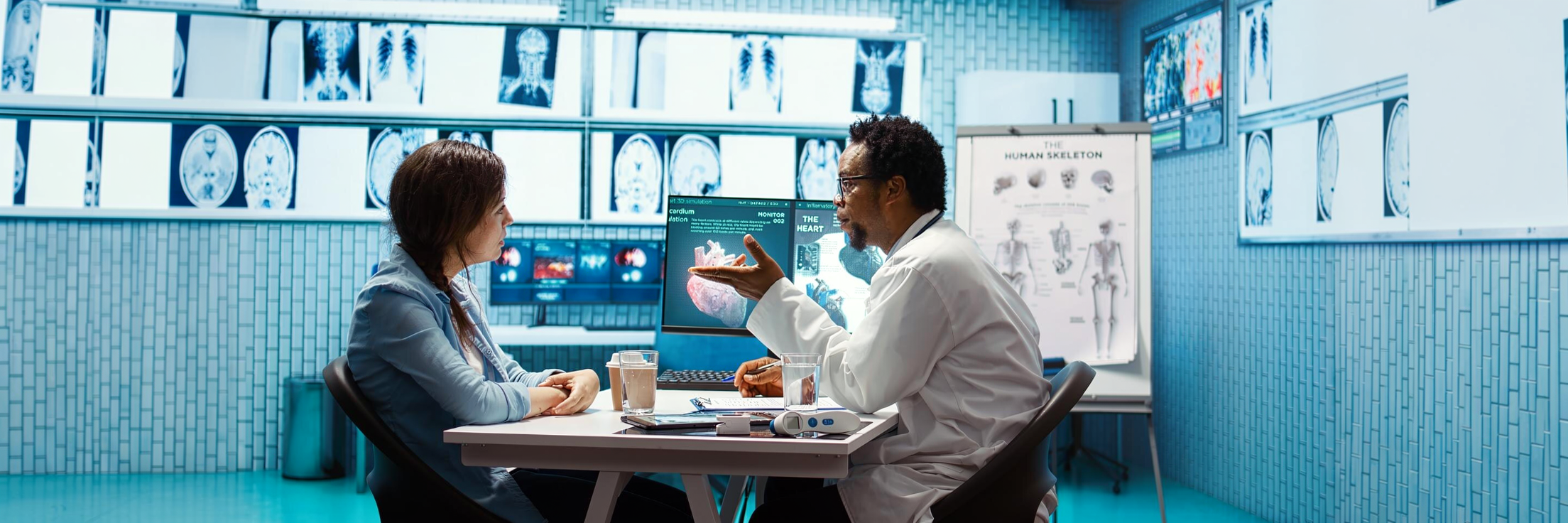
When something goes wrong with your kidneys, bladder, or prostate, the right scan can make all the difference. That’s where the CT vs MRI urology question comes in. Both are powerful diagnostic imaging tools, but they work differently and shine in different situations. A clear urological imaging comparison helps you understand why your doctor may recommend one over the other. CT scans are fast and excellent for kidney stones, while MRI offers detailed soft tissue views useful for certain tumors. Whether you need kidney imaging, bladder imaging, or a look at the prostate, the best choice depends on your specific situation. Let’s break down how each scan works and when it’s most helpful.
Doral Health & Wellness offers expert urology care to help you understand which imaging test fits your needs. If you’ve been told you need a scan and feel unsure about your options, the experienced team at Doral Health & Wellness – Urinary Health Department can explain the differences clearly. A personalized consultation is the smartest first step — reach out today.
What Are CT and MRI Scans?
Both CT and MRI create detailed pictures of the inside of your body. But they use very different technology to get there.
CT Scan Explained
A CT (computed tomography) scan uses X-rays and a computer to build cross-sectional images. Think of it as many X-ray slices combined into one detailed picture.
CT scans are quick — often finished in just a few minutes. That speed makes them ideal for urgent situations, like sudden, severe flank pain.
MRI Explained
An MRI (magnetic resonance imaging) uses powerful magnets and radio waves instead of radiation. It produces highly detailed images, especially of soft tissues.
MRI takes longer than CT, sometimes 30 to 60 minutes. The trade-off is superior contrast resolution, which helps distinguish between similar-looking tissues.
When CT is Commonly Used in Urology
CT is often the first choice for many urological problems. Its speed and accuracy make it a workhorse in urgent care.
Kidney Stones and Urgent Evaluation
CT is the gold standard for detecting kidney stones. It spots stones of nearly any size and location, even tiny ones MRI may miss.
Doctors often turn to CT when:
- Sudden severe pain – Rapid imaging helps diagnose stones or blockages fast
- Blood in the urine – CT can locate the source quickly
- Suspected infection or abscess – It shows fluid collections and inflammation clearly
- Trauma – Emergency settings rely on CT’s speed
For stone detection, CT remains hard to beat. According to the Merck Manuals, MRI does not provide much useful information about urinary tract stones — another reason CT leads here.
When MRI May Be Preferred
MRI steps forward when fine detail matters most. Its strength lies in viewing soft tissues without radiation.
Soft Tissue and Tumor Detail
MRI offers far better contrast resolution than CT, as noted in research published through the NIH. This makes it valuable for examining complex masses and soft structures.
MRI may be preferred when:
- Prostate concerns – MRI helps evaluate prostate cancer and guide biopsies
- Kidney tumors – Detailed images aid in characterizing masses
- Surgical planning – Precise soft tissue maps support careful planning
- Kidney function issues – MRI contrast agents are often less risky for the kidneys than CT contrast
The Urology Care Foundation notes that MRI contrast may be safer for patients with reduced kidney function. That’s an important factor in certain cases.
Kidney Imaging vs Bladder Imaging: How Needs Differ
Different organs call for different approaches. Your symptoms shape which scan delivers the most useful answers.
Kidney Imaging Considerations
Kidney imaging often depends on the suspected problem. CT excels at stones and acute issues, while MRI shines when characterizing tumors or assessing tricky soft tissue questions.
Bladder Imaging Considerations
Bladder imaging may rely on either scan, depending on the clinical question. MRI can offer detailed views of the bladder wall, while CT helps assess broader structures and rule out other causes. Sometimes ultrasound or other tests round out the picture.
The key takeaway? No single scan wins every time. The right choice flows from the question your doctor needs to answer.
Safety Considerations You Should Know
Both scans are generally safe, but each has factors worth discussing with your provider.
CT Safety Factors
- Radiation – CT uses ionizing radiation, so doctors weigh its use carefully, especially for repeat scans
- Contrast concerns – CT contrast dye can stress the kidneys in some patients
MRI Safety Factors
- No radiation – MRI avoids ionizing radiation entirely
- Claustrophobia – The enclosed scanner can feel tight; open MRI options may help
- Implants – Certain metal implants or devices may not be MRI-safe
- Time – Longer scan times require you to stay still
Always tell your care team about implants, allergies, kidney issues, or pregnancy before any scan.
CT vs MRI Urology: A Quick Comparison
This table summarizes the key differences at a glance.
Factor | CT Scan | MRI |
Speed | Fast, often minutes | Slower, 30–60 minutes |
Radiation | Uses ionizing radiation | No radiation |
Soft tissue detail | Good | Excellent contrast resolution |
Stone detection | Excellent, gold standard | Limited for stones |
Common use cases | Stones, trauma, urgent pain | Tumors, prostate, soft tissue detail |
The bottom line: CT favors speed and stones, while MRI favors detail and soft tissue clarity.
Why the Best Choice Depends on the Clinical Question
There’s no universal “winner” in the CT vs MRI urology debate. The smartest scan is the one that answers your specific question.
For example, severe flank pain that suggests a stone usually points to CT. A suspicious prostate finding often calls for MRI. Reduced kidney function might shift the decision toward MRI contrast. Your full health picture guides the call.
Finding the Right Specialist
Expert guidance makes these decisions clearer. When researching, many people search for a urologist near me or a trusted Brooklyn urologist to discuss their symptoms and imaging needs.
Looking for a urology clinic near me or expert urology in NY connects you with providers who understand which scan fits each situation. A qualified urology provider can review your history, symptoms, and kidney function before recommending the right test.
Evaluation by an experienced specialist matters. The right imaging choice protects your health and avoids unnecessary tests.
Make an Informed Imaging Choice
Choosing between CT and MRI isn’t about which scan is “better” overall — it’s about which one answers your clinical question best. CT delivers speed and unmatched stone detection, making it ideal for urgent kidney imaging and acute pain. MRI offers superior soft tissue detail, supporting prostate evaluation, tumor characterization, and bladder imaging when fine detail matters. A thoughtful urological imaging comparison, guided by an expert, ensures you get the right diagnostic imaging for your situation.
The most important step is an honest conversation with a urology team that listens and explains your options clearly. Patients across New York searching for a Brooklyn urologist, a urology clinic near me, or expert urology in NY deserve compassionate, knowledgeable care. Doral Health & Wellness is here to help you understand your imaging choices and guide you toward the test that fits your needs. To take charge of your urological health, contact Doral Health & Wellness today at 1-718-365-2555 or visit us at 1797 Pitkin Avenue, Brooklyn, New York 11212.
For general information about Doral Health & Wellness services, you can contact or email info@doralhw.org.