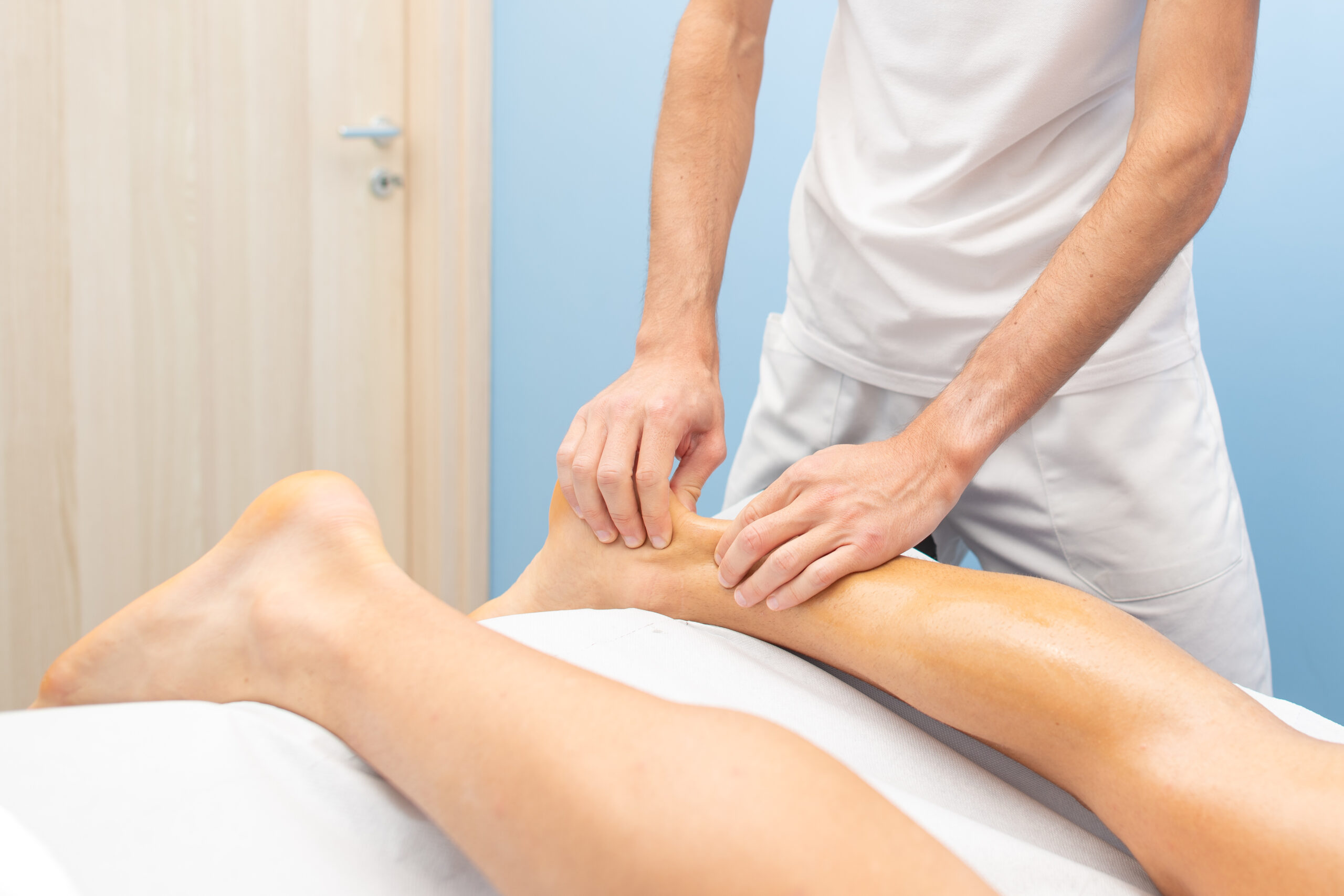
If you suffer from pain and swelling in the tendons of your foot, chances are you may have developed tendonitis. It is a common foot condition that occurs due to injuries. Luckily, it can get better with treatment and exercises. Learn 5 exercises & stretches for tendonitis pain relief and treatment options in this article. Get a consultation with the best Podiatrists in Brooklyn.
5 Exercises & Stretches for Pain Relief
Certain cases of foot tendonitis can get better with some exercises and stretches. Some exercises/stretches are given below:
- Towel stretch:
This stretch can help decrease pain caused by foot tendon injury and enhance the healing of the foot and calf muscles. You can perform this stretch on the ground with the help of a bath or pool towel. The steps are as follows:
- Sit on the ground or floor and straighten your legs together in front of you.
- Wrap a towel around the toes and hold its ends with your hands.
- Now, gently pull the towel toward you until you feel a stretch at the bottom of your foot and the back of your legs.
- Hold this stretch for 30 to 60 seconds and repeat it 3 to 5 times.
- You can do it with one leg first or both together. It depends on your choice and the way you feel better stretch.
- Standing calf stretch:
This stretch is great for putting more tension on the ankle and calf instead of stretching in a sitting position. To perform this stretch, you need a sturdy closed door or a blank wall. Its steps are:
- Stand in front of the wall or door and place your palms against it, a little higher than your shoulders.
- Slowly lean forward and move forward one foot in front of you, keeping your feet flat on the ground with toes pointing forward.
- Try pushing towards the wall in that position to feel a stretch in the back of your lower leg.
- Hold this position for 30 seconds and repeat it 2 to 3 times.
If you don’t feel the stretch, you can bend the back knee slightly while pushing the heel into the floor.
- Standing soleus stretch:
This stretch helps the soleus muscle (a deep calf muscle) relax, which usually gets tight in endurance athletes. To perform this stretch, follow these steps:
- Stand in front of a wall with a gap.
- Keep your injured leg on the floor. Bring your other leg forward toward the wall.
- Turn your injured foot a little bit inside toward the other.
- Keep your other leg forward and bend it slightly so that your knee leans into the wall until you feel a stretch on the injured leg.
- Hold this position for 30 seconds and repeat it 3 times.
- Heel raises:
This stretch can help your calf muscle relax and promote healing. You need to have stairs in your house or office to perform this exercise. To perform this exercise, follow these steps:
- Stand on the edge of the step on your toes and hold the side for support.
- Raise your toes and hold the position for 5 to 10 seconds and then lower them and hold this position for 5 to 10 seconds.
- Repeat this exercise 5 to 10 times.
- Ankle flexion:
This stretch helps to relax your ankle and calf muscles. You need a resistance band to perform this stretch. To perform this stretch, follow these steps:
- Sit on the ground or floor with your legs in front of you.
- Now, put a resistance band around the ball of one foot and extend the leg in a straight position.
- Try to extend your leg away from your body while flexing the ankle by pulling the toes toward the shin. Repeat the movement up to 10 times and repeat with the other leg.
Treatments for pain relief
To treat tendonitis, the doctor’s main goal is to relieve pain and lower irritation. For that, a combination of different treatment options is used. Common treatment options are:
- Medications:
Medicines can help you relieve pain caused by tendinitis. They may include:
- Pain relievers: Your doctor may prescribe non-steroidal anti-inflammatory drugs (NSAIDs) such as aspirin, naproxen sodium, ibuprofen, and acetaminophen to relieve tendonitis pain. Some creams with pain-relieving properties may also be prescribed. These products can relieve pain and don’t have the side effects of taking drugs orally.
- Steroids: A steroid shot can be recommended if medicines don’t improve your condition. It is given to the tendon and lasts usually for more than 3 months. However, it is not repeated often because it can weaken a tendon and increase the risk of tendon tearing.
- Platelet-rich plasma: In this treatment option, the doctor uses your blood to extract platelet-rich plasma to inject into your affected tendon to use its healing factors. This not only relieves pain but also repairs the wound. Although research for this therapy is going on, it might be the best way to treat many chronic tendon conditions.
- Physical therapy:
Physical therapy exercises help to strengthen the muscles and tendons and the flexibility of the foot and ankle. It focuses on the contraction of a muscle while lengthening, which is an effective way to treat many chronic tendon conditions.
- Surgical procedures:
If tendonitis doesn’t improve with other treatments, then surgery is recommended. Depending on the severity of the tendon injury, surgery may either repair or remove it from the bone. This procedure is called synovectomy. It is done by a minimally invasive procedure for faster recovery.
- Home remedies:
You can relieve your pain by using home remedies like the RICE method. It helps to speed your recovery and prevent more problems. It stands for:
- Rest: You should avoid doing any activity that increases your pain and swelling. Instead, take a rest for a while. Let the wound heal itself. You can do other activities when it doesn’t stress the injured tendon. Some activities can promote flexibility, like swimming and water exercises.
- Ice: You can use some ice therapy to decrease pain, muscle spasms, and swelling. Just apply ice packs to the injured area after wrapping it in a towel for 15 to 20 minutes several times a day. Ice massage or slush baths with ice and water can also help.
- Compression: This helps to lower the swelling by wrapping elastic bandages around the injured joint tightly.
- Elevation: If tendonitis affects your knee, when you sit or lie down, raise your hurt leg above the heart level to reduce swelling.
- Orthotics:
Orthotics are designed to support and stabilize your foot when you perform certain movements like running and jumping to take weight off the tendons and let them heal. Orthotics include arch supports, inserts, prescription braces, custom foot orthotics, etc.
Foot tendonitis causes irritation and inflammation of the tendons in your ankle and foot. Generally, it occurs due to overexertion and heals within a few weeks with non-surgical treatment. If left untreated, it can get worse and lead to a tendon tear. So, notice the pain and swelling in your ankle and visit the podiatrist to get appropriate treatment for foot tendonitis for faster recovery.
Need help with foot problems? Visit our podiatry clinic in Brooklyn to get professional medical help. Call us to book your appointment now!!!!!! Doral Health & Wellness employs Podiatrists with extensive education and expertise. Trauma to the tendons, muscles, and bones of the foot is quite common. It is not a good idea to put off seeing Foot Doctor Brooklyn until you are in a lot of pain. Our address is 1797 Pitkin Avenue, New York, NY 11212. To make an appointment, please call +1-718-367-2555 or send an email toinfo@doralhw.org.