When a child has been through something painful, the signs are not always easy to read. Your child may have nightmares, sudden outbursts, or quiet moments where they seem far away. When you ask what is wrong, they may not have an answer.
That silence does not mean they are fine. Young children often lack the words to describe fear, grief, or confusion. Non-directive play therapy offers a gentle way forward by helping traumatized children express hidden feelings through the language they know best: play.
This guide explains what this therapy is, how it works, and what research says about it. You will also learn what to expect from sessions and how a behavioral health specialist can support your family.
What Is Non-Directive Play Therapy?
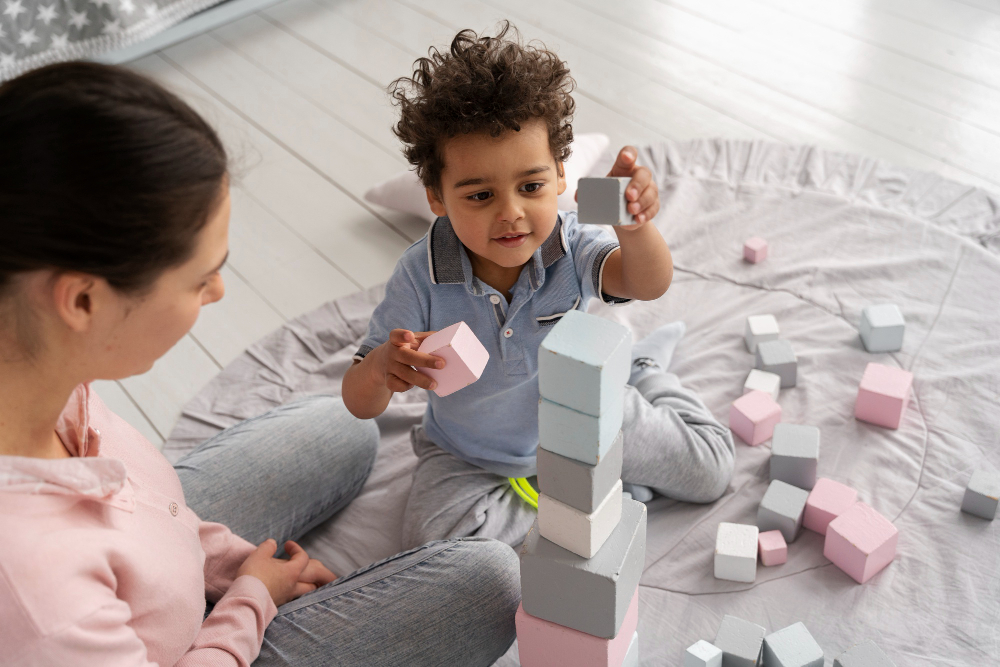
Play is a child’s primary language. Long before children can explain their feelings, they use play to make sense of the world around them.
Non-directive play therapy, often called child-centered play therapy, builds on this natural skill. The child leads the session, and the therapist follows. There are no scripts and very few rules.
The Role of the Playroom
Sessions take place in a welcoming playroom filled with carefully chosen items. These may include:
- Dolls and stuffed animals: These help children act out family roles and relationships.
- Puppets and costumes: These let children try on new roles and voices.
- Sand trays and figures: These help children build scenes that reflect their inner world.
- Art supplies: These let children show feelings they cannot yet name.
Limits are set only when needed to keep the child, the therapist, and the toys safe.
Helping Traumatized Children Express Hidden Feelings Through Play
Trauma can leave children feeling unsafe and out of control. Talking about it directly may feel too scary. Play changes that.
Toys add a layer of safety. A child does not have to say, “I was scared.” Instead, a stuffed bear might hide from a storm, or a superhero might get buried in the sand. Through these stories, your child can begin to work through what happened.
Situations Where It Can Help
This approach supports children facing many hard experiences, including:
- Trauma or abuse
- Grief and loss
- Divorce or family changes
- Anxiety
- Illness or bullying
What Research Says About Child-Centered Play Therapy
Families want to know that a treatment truly works. The research on this approach is encouraging.
Studies have found that children who take part in child-centered play therapy often see clear benefits:
Benefit | What It Means for Your Child |
Social-emotional wellness | Better ability to manage and share feelings |
Academic performance | Stronger focus and success in school |
Coping skills | Healthier ways to handle stress and solve problems |
Caregiver relationships | Closer, calmer bonds with parents and teachers |
These gains often reach beyond the playroom and into everyday family life.
What to Expect From Play Therapy Sessions
Starting therapy can feel uncertain for parents. Knowing what lies ahead can ease that worry.
Play therapists are licensed mental health professionals with a master’s or doctoral degree. They also complete specialized play therapy training. In each session, the therapist watches the toys your child chooses, the stories they create, and the emotions they show.
How You Stay Involved
You are an important part of your child’s healing. A caring behavioral health specialist will share insights with you, suggest ways to support your child at home, and track progress over time. A mental health clinic in Brooklyn can also offer flexible scheduling that fits around school, medical visits, and family routines.
Progress takes time. Every child heals at their own pace, and that is okay.
Give Your Child a Safe Place to Heal
Your child’s feelings deserve to be heard, even when words are hard to find. Non-directive play therapy gives them a safe space to share what they carry inside and to build the skills they need to feel secure again.
You do not have to face this alone. Our Behavioral Health team offers compassionate, personalized care for children and families. A behavioral health specialist on our team is ready to answer your questions and guide your next step. Reach out today by calling +1-718-367-2555 or visiting us at 1797 Pitkin Avenue, Brooklyn, NY 1121 to schedule an evaluation.