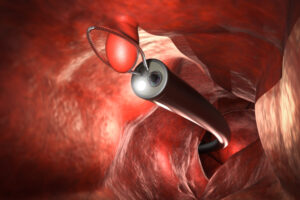
Learning you need surgery to prevent a stroke can feel frightening, especially when the procedure involves your carotid arteries, the vessels that carry blood directly to your brain. If your doctor has mentioned transcarotid artery revascularization, you may be wondering what this treatment actually involves and whether it is right for you.
Transcarotid artery revascularization, or TCAR, is a minimally invasive procedure designed to treat carotid artery disease while protecting your brain from the debris that can cause a stroke. It works by reversing carotid blood flow to prevent stroke during the critical moments when plaque is most likely to break loose. For many patients, this approach offers a safer path forward than older surgical methods.
Understanding how TCAR works, and why your vascular specialist might recommend it, can replace uncertainty with confidence as you prepare for treatment.
What Is Transcarotid Artery Revascularization?
Transcarotid artery revascularization is a procedure that treats narrowed or blocked carotid arteries without requiring the larger incisions and longer recovery times associated with traditional carotid surgery. Your surgeon accesses the carotid artery through a small incision at the base of your neck, rather than working through the groin or performing open neck surgery.
This direct access allows your surgical team to place a stent that supports the artery wall and helps restore healthy blood flow. The procedure was developed specifically for patients who face higher risks with traditional carotid endarterectomy, giving them a dependable option that still delivers strong outcomes.
Why Reversing Blood Flow Matters
The defining feature of this procedure is what happens before the stent is ever placed. Your surgeon temporarily reverses blood flow away from your brain and toward a filtering system outside your body. This step is not an afterthought. It is the reason TCAR has become such a trusted technique.
During a traditional stenting procedure, there is a brief window where tiny fragments of plaque can break free and travel toward the brain, raising the risk of stroke. Reversing carotid blood flow to prevent stroke eliminates much of that risk by redirecting any loose debris away from the brain entirely. Once the stent is in place and secure, your surgeon restores normal blood flow in the correct direction.
- Protection during the procedure: Blood flow reversal shields your brain from debris at the exact moment it is most vulnerable.
- Shorter recovery: The smaller incision typically means less discomfort and a faster return to daily activities.
- Lower stroke risk: Clinical data have shown this technique reduces the chance of stroke compared to traditional carotid stenting.
Who Is a Candidate for This Procedure?
Not every patient with carotid artery disease needs the same treatment. Your vascular specialist will consider several factors before recommending transcarotid artery revascularization.
Patients at Higher Surgical Risk
Some patients face greater complications from open carotid surgery due to age, anatomy, or existing health conditions. If you fall into this category, your doctor may view TCAR as a safer alternative that still effectively treats blocked arteries.
Patients With Narrow or High-Risk Anatomy
Carotid arteries positioned higher in the neck can be difficult to reach safely with traditional surgery. Because TCAR requires only a small incision near the collarbone, it often allows your surgeon to treat vessels that would otherwise be hard to access.
Patients Who Have Had Previous Neck Surgery or Radiation
Scar tissue from earlier procedures or radiation therapy can complicate traditional carotid surgery. TCAR’s smaller surgical footprint makes it a practical option for patients in this situation.
What Should You Expect During Recovery?
Most patients stay in the hospital for one night following the procedure, with many returning to light activity within a few days. Your care team will monitor your incision site and overall recovery closely during this period.
Recovery Factor | Transcarotid Artery Revascularization | Traditional Carotid Endarterectomy |
Incision size | Small, near the collarbone | Larger, along the neck |
Hospital stay | Typically one night | Often one to two nights |
Return to light activity | A few days | One to two weeks |
Anesthesia | Local or general | General |
Your vascular specialist will give you specific guidance based on your health history and how your body responds to treatment, but many patients find the recovery process more manageable than they expected.
Finding the Right Vascular Care Team
Choosing where to receive this treatment matters just as much as choosing the treatment itself. A skilled vascular specialist brings experience with the precise technique that reversing carotid blood flow to prevent stroke requires, along with the judgment to know when this procedure is the right fit for your situation.
If you live in or near Brooklyn, a vascular clinic in Brooklyn can offer convenient access to specialists who perform this procedure regularly. Working with a vascular clinic in Brooklyn also means your follow-up care, imaging, and long-term monitoring stay close to home, which can ease the logistics of an already stressful time.
You Have a Partner in This Decision
Facing carotid artery disease can bring up fear about what might happen next. That fear is valid, but it does not have to define your experience with treatment.
Our Vascular team guides patients through every step of care related to transcarotid artery revascularization, from the initial evaluation to post-procedure follow-up. Reach out today by calling +1-718-367-2555 or visiting us at 1797 Pitkin Avenue, Brooklyn, NY 1121 to schedule a consultation and learn whether this approach is the right path for protecting your health.