Skin cancer is the most prevalent form of cancer, yet it is also one of the most preventable. As one of the more serious common skin conditions, understanding its early signs and implementing preventative measures are fundamental components of maintaining your well-being. This guide offers essential skin health tips for early detection and prevention, crucial for achieving and preserving healthy skin. While awareness is key, any concerns about your skin’s health warrant a consultation with a qualified skin doctor for professional assessment and, if necessary, appropriate skin treatments.
At Doral Health & Wellness, our commitment is to provide integrated, interdisciplinary health services to the East New York community. Our expert dermatologists are dedicated to diagnosing and treating a wide range of skin conditions with precision and care. If you are seeking a trusted skin doctor for a screening or consultation, we offer our comprehensive services in an innovative medical facility.
Essential Skin Health Tips for Cancer Prevention and Detection
Vigilance and proactive care are your strongest allies against skin cancer. Early detection dramatically increases the effectiveness of skin treatments and improves outcomes. This involves regular self-examinations and professional screenings, especially for those with increased risk factors. A skin doctor can provide a definitive diagnosis, but knowing what to look for is a critical first step.
Recognizing the Early Warning Signs
The most common sign of skin cancer is a change on the skin, such as a new mole or spot, or a change in an existing mole. Familiarizing yourself with the ABCDEs of melanoma is a highly effective method for self-assessment.
- Asymmetry – One half of the mole or spot does not match the other half.
- Border – The edges are irregular, ragged, notched, or blurred.
- Color – The color is not uniform and may include different shades of brown or black, or sometimes patches of pink, red, white, or blue.
- Diameter – The spot is larger than 6 millimeters across (about the size of a pencil eraser), although melanomas can sometimes be smaller.
- Evolving – The mole is changing in size, shape, or color.
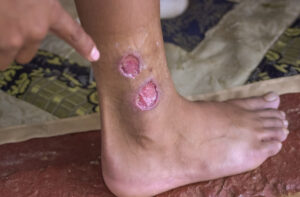
Beyond the ABCDEs, other warning signs for different types of skin cancer (like basal cell and squamous cell carcinoma) include a firm, red nodule, a flat lesion with a scaly, crusted surface, or a new sore that doesn’t heal.
Key Prevention Strategies
Protecting your skin from ultraviolet (UV) radiation is the single most important step you can take to lower your skin cancer risk.
- Seek Shade – Limit your direct sun exposure, especially between 10 a.m. and 4 p.m. when UV radiation is strongest.
- Wear Protective Clothing – Cover up with long-sleeved shirts, pants, and wide-brimmed hats.
- Use Broad-Spectrum Sunscreen – Apply a sunscreen with an SPF of 30 or higher every day, even when it’s cloudy. Reapply every two hours, or more often if you’re swimming or sweating. This is one of the most vital habits for healthy skin.
- Avoid Tanning Beds – Indoor tanning devices emit harmful UV radiation and are a proven cause of skin cancer.
Understanding the Main Types of Skin Cancer
There are several types of skin cancer, but three are the most common. Each has a different appearance and may require different skin treatments.
Basal Cell Carcinoma (BCC)
This is the most common type of skin cancer. It often appears as a slightly transparent bump on sun-exposed skin, such as the head and neck. It may also look like a flesh-colored or pearly bump, or a pinkish patch of skin. BCCs grow slowly and rarely spread to other parts of the body, but they can be disfiguring if not treated promptly.
Squamous Cell Carcinoma (SCC)
The second most common type, SCC, also occurs on sun-exposed areas like the face, ears, and hands. It might present as a firm, red nodule or a flat lesion with a scaly, crusted surface. SCC can grow deep into the skin and cause significant damage. While less common, it is more likely than BCC to spread to other parts of the body.
Melanoma
Melanoma is less common than BCC and SCC but is far more dangerous because it is much more likely to spread to other organs if not caught early. It can develop anywhere on your body, even in areas not exposed to the sun. Early detection and treatment are crucial. If you are concerned about a mole, searching for the “best dermatologist near me” for a professional evaluation is an urgent and necessary step.
The Role of a Skin Doctor in Diagnosis and Treatment
While self-exams are important, they do not replace a professional evaluation from a dermatologist. A skin doctor has the training and tools to spot suspicious lesions that may be difficult for the untrained eye to see. For those in New York, a search for a “Skin doctor NY” can connect you with specialists.
The Diagnostic Process
If you or your doctor find a suspicious spot, the next step is a biopsy. During this simple procedure, the skin doctor will remove a small sample of the lesion and send it to a lab for analysis. This is the only way to make a definitive diagnosis of skin cancer.
Professional Skin Treatments
Treatment for skin cancer depends on the type, size, location, and depth of the lesion.
- Excisional Surgery – The doctor cuts out the cancerous tissue and a surrounding margin of healthy skin.
- Mohs Surgery – This specialized procedure involves removing the skin growth layer by layer, examining each layer under a microscope until no abnormal cells remain. It is often recommended by the best skin doctor for cancers in cosmetically sensitive or critical areas.
- Cryotherapy – The doctor uses liquid nitrogen to freeze and destroy the cancerous cells.
- Topical Treatments – For some superficial skin cancers, prescription creams or gels can be applied directly to the skin.
Your Partner in Health and Well-being: Doral Health & Wellness
Protecting your skin and being vigilant about changes are fundamental practices for lifelong health. Understanding the signs of skin cancer and embracing preventative measures like sun protection and regular skin checks can dramatically reduce your risk. While these skin health tips are crucial, the expertise of a medical professional is indispensable for accurate diagnosis and effective treatment of any concerning skin conditions.
For residents of the East New York community and surrounding areas, Doral Health & Wellness is your definitive source for expert dermatological care. We provide comprehensive medical services, including vital skin cancer screenings and advanced skin treatments, within our state-of-the-art facility. Our specialty care physicians are dedicated to delivering trusted medical advice and personalized care. If you are searching for the “best skin doctor NY” has to offer, contact Doral Health & Wellness today 1-718-365-2555 or visit us at 1797 Pitkin Avenue, Brooklyn, New York 11212 to schedule your consultation and take a proactive step in safeguarding your skin health. For general information about Doral Health & Wellness services, you can contact or email info@doralhw.org.