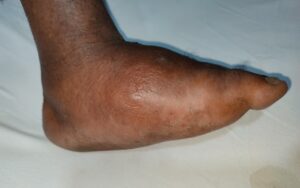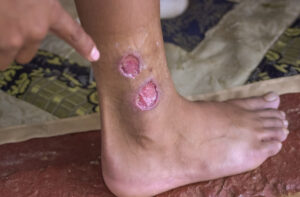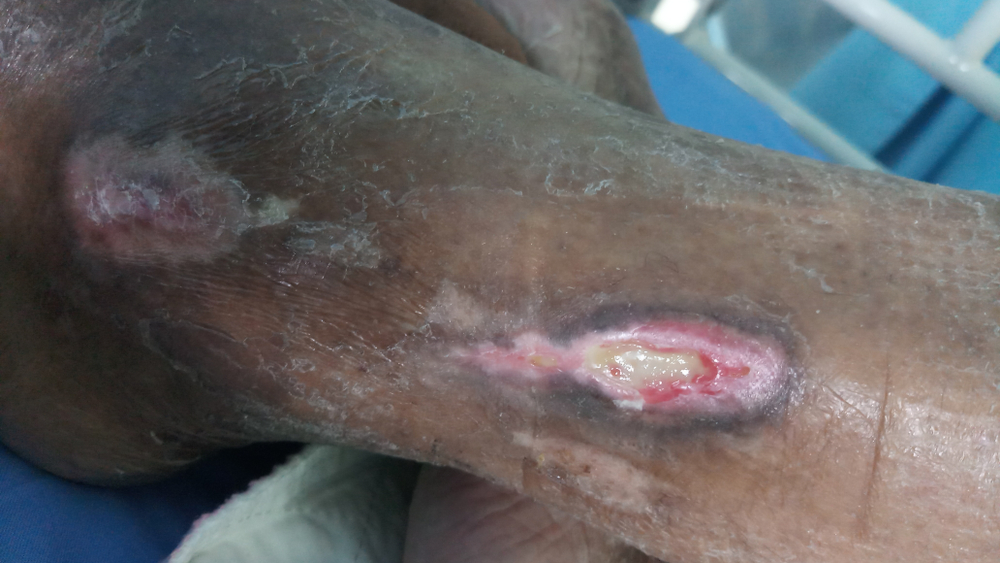
The difference between venous and arterial foot ulcers comes down to wound shape, location, and surrounding skin. Venous ulcers typically appear near the ankle with irregular, shallow borders and swollen skin. Arterial ulcers often form on the toes or heel with punched-out, well-defined edges and pale, cool skin. Learning to identify distinct wound margins early helps determine the right treatment path and prevents complications.
If you or a loved one has noticed a slow-healing sore on the foot or lower leg, you are probably searching for answers. A wound that will not close can feel frightening, especially when you are not sure what caused it or how serious it might be. Understanding the difference between venous and arterial foot ulcers is one of the first steps toward getting the right care.
These two wound types look similar at first glance, but they stem from very different circulation problems and require different treatment approaches. Knowing how to identify distinct wound margins, along with other visible signs, can help you describe symptoms accurately to a podiatrist and get a faster, more accurate diagnosis.
Key Differences Between Venous and Arterial Foot Ulcers
Wound Margins and Appearance
Venous ulcers usually have irregular, uneven borders. The wound bed often looks red or pink, and some drainage is common. Arterial ulcers, on the other hand, tend to have smooth, clearly defined edges that look almost as if they were cut with a tool. The base of an arterial wound is often pale, gray, or yellow, with little to no drainage.
Location and Pain
Venous ulcers most often develop around the inner ankle, above the bony area. They may feel achy or heavy, especially after standing for long periods. Arterial ulcers typically form on the toes, heels, or outer ankle, and the pain is usually sharp. It often worsens at night or when the leg is elevated, since less blood is reaching the area.
Skin and Surrounding Tissue Changes
The skin around a venous ulcer is often swollen, warm, and discolored with a brownish tint caused by pooled blood. Around an arterial ulcer, the skin tends to be thin, shiny, cool to the touch, and pale. Hair loss on the leg and toenail thickening are also common signs of poor arterial circulation.
How to Identify Distinct Wound Margins
Venous Ulcer Wound Margins
Venous wound margins are typically shallow and irregular, blending gradually into the surrounding tissue rather than forming a sharp line. The surrounding skin may look flaky or hardened from long-term swelling. This gradual, uneven border is one of the clearest signs pointing toward a venous cause.
Arterial Ulcer Wound Margins
Arterial wound margins look almost sculpted, with a clean, round, or oval shape. Because blood flow to the area is limited, the tissue around the wound does not swell the way it does with venous ulcers. Instead, it often looks dry and tight. These distinct wound margins are a strong indicator that circulation, not pressure, is the root issue.
Why Proper Diagnosis Matters
Treating a foot ulcer the wrong way can slow healing or make the wound worse. Compression therapy, for example, helps venous ulcers but can be harmful for arterial ulcers, where blood flow is already restricted. This is why a proper evaluation from a podiatrist is so important before starting any treatment plan.
A podiatrist can assess circulation, measure blood flow in the leg, and examine the wound margins closely to confirm whether an ulcer is venous, arterial, or a combination of both. If you live in the area, visiting a podiatry clinic in Brooklyn gives you access to specialists who understand how to evaluate these wounds accurately and create a care plan suited to your specific needs.
Getting the Right Care for Your Foot Ulcer
A foot ulcer that will not heal on its own is not something to manage alone. The sooner a podiatrist examines the wound, the sooner you can start a treatment plan built around your actual diagnosis rather than guesswork. A trusted podiatry clinic in Brooklyn can guide you through every step, from initial evaluation to long-term healing.
Reach out to our podiatry team today by calling +1-718-367-2555 or visiting us at 1797 Pitkin Avenue, Brooklyn, NY 1121 to schedule an evaluation. Your feet carry you through every day, and they deserve care from people who understand exactly what they need.