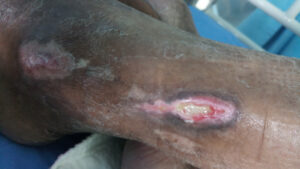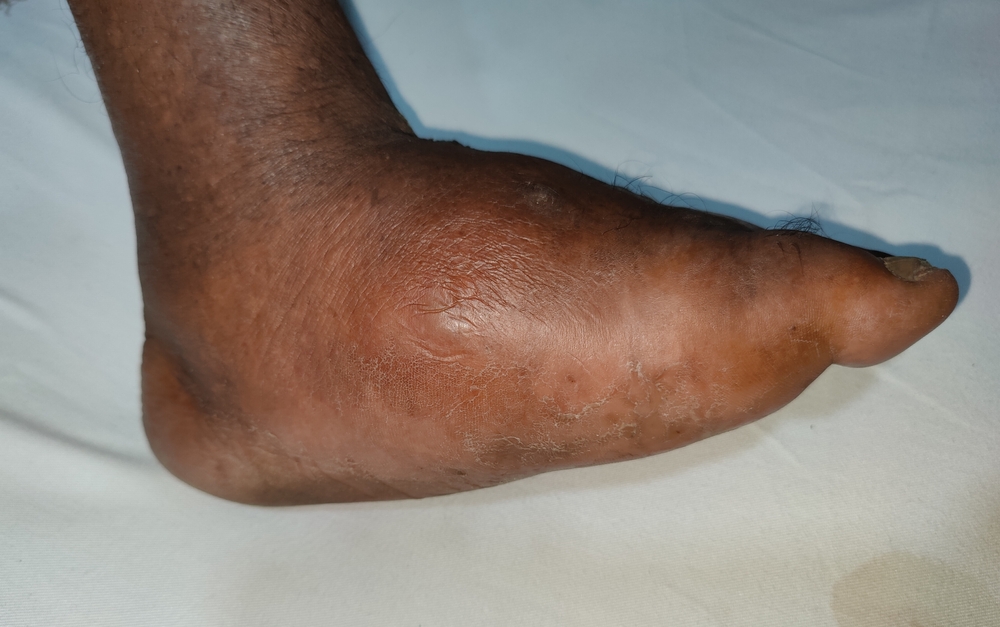
One of the most overlooked warning signs of Charcot foot is swelling and warmth without any pain, especially in people with diabetic neuropathy. Because nerve damage blocks normal pain signals, the foot can suffer serious bone and joint damage without obvious discomfort. A podiatrist can catch it early through a physical exam and imaging.
If your foot looks swollen or feels unusually warm but doesn’t hurt, it’s easy to assume everything is fine. For people living with diabetic neuropathy, that assumption can be dangerous. Charcot foot often shows up this way: visible changes to the foot with little to no pain to alert you that something is wrong.
Understanding these warning signs, and knowing when swelling and warmth without pain should send you to a podiatrist, can protect your foot’s shape and function from permanent damage.
What Is Charcot Foot?
Charcot foot is a condition where the bones, joints, and soft tissue in the foot weaken and begin to break down. It most often develops in people with nerve damage, or neuropathy, caused by diabetes. Because the nerves can no longer send accurate pain signals, a person may keep walking on an injured foot without realizing the damage happening underneath.
Over time, this can lead to fractures, dislocated joints, and a collapsed arch. The foot may even change shape entirely, which is why catching the condition early matters so much.
Why Swelling and Warmth Without Any Pain Is a Red Flag
How Nerve Damage Hides the Pain
In a healthy foot, swelling and warmth usually come with pain. That pain is your body’s way of telling you to rest and seek care. With Charcot foot, diabetic neuropathy interferes with those pain signals. You may have significant inflammation happening inside the foot while feeling little more than mild discomfort, or nothing at all.
What Swelling and Warmth Without Pain Can Mean
A foot that is noticeably warmer than the other, along with puffiness around the midfoot or ankle, can point to bones and joints breaking down in real time. This combination, swelling and warmth without any pain, is one of the clearest early indicators that something beyond a minor injury is happening.
Other Warning Signs of Charcot Foot to Watch For
Along with swelling and warmth, keep an eye out for:
- Redness: A flushed or reddened appearance on the top or side of the foot.
- Changes in foot shape: A flattened arch or a foot that looks different from your other one.
- Instability: A feeling that your foot is less steady or secure while standing or walking.
- Mild tingling or pressure: Sensations that feel minor but persist over days or weeks.
Any one of these signs on its own is worth attention. Several appearing together deserve a prompt visit to a podiatrist.
When to See a Podiatrist
If you have diabetes or any condition that affects nerve sensation, do not wait for pain to confirm a problem. A podiatrist can evaluate swelling and warmth with imaging and a hands-on exam, catching Charcot foot before it progresses to fracture or deformity.
Visiting a podiatry clinic in Brooklyn at the first sign of foot changes gives you the best chance of avoiding long-term complications. Early treatment, including offloading the foot with a cast or brace, can prevent the condition from worsening.
Take the Next Step Toward Healthier Feet
You do not have to figure out whether your symptoms are serious on your own. Our podiatry team works with patients throughout Brooklyn to identify the warning signs of Charcot foot early, before swelling and warmth turn into lasting damage.
Reach out to us today by calling +1-718-367-2555 or visiting us at 1797 Pitkin Avenue, Brooklyn, NY 1121 to schedule an evaluation at our podiatry clinic in Brooklyn.