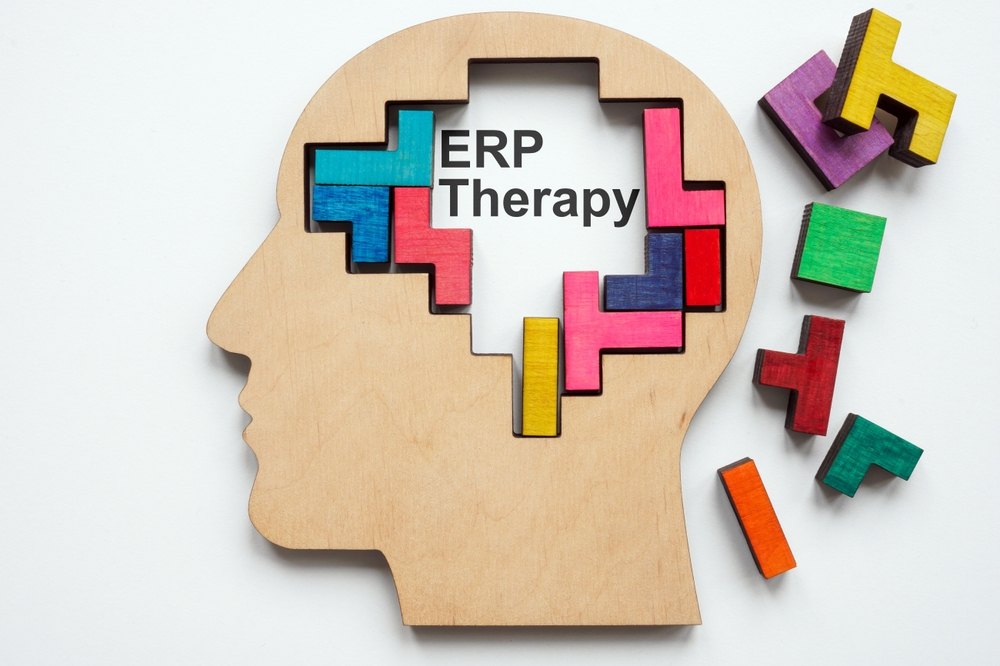
ERP for OCD works by gradually exposing you to feared thoughts or situations without performing compulsions. Over time, this practice teaches your brain that anxiety fades on its own, retraining fear responses. A trained specialist can guide you through each step safely and effectively.
Living with OCD can feel like your mind is constantly on alert. Intrusive thoughts arrive uninvited, and the urge to perform a ritual to calm them can feel impossible to resist. If this sounds familiar, you are not alone, and there is a treatment with decades of evidence behind it.
ERP for OCD, short for Exposure and Response Prevention, teaches your brain a new way to respond to fear. Instead of avoiding what scares you or giving in to compulsions, you learn to sit with discomfort until it naturally eases. This is not about becoming fearless. It is about learning how to face fears to retrain your brain, so anxiety no longer runs your day.
This guide walks through how ERP works, what to expect from treatment, and how the right support can help.
What Is ERP for OCD and How Does It Work?
Exposure and Response Prevention, known as ERP, is widely considered the most effective treatment for OCD. During ERP, you are gradually exposed to the thoughts, images, or situations that trigger your obsessions. Instead of performing a compulsion to lower your anxiety, you practice tolerating that discomfort until it passes on its own.
Why Avoidance Keeps OCD Strong
Avoidance and compulsions offer quick relief, but that relief teaches your brain the fear was real and worth escaping. Each time you avoid a trigger, the fear response grows stronger. ERP breaks this cycle by showing your brain that the danger was never there to begin with.
How to Face Fears to Retrain Your Brain
Facing fears is not about jumping into the deepest anxiety all at once. ERP is structured and gradual, built around a hierarchy of triggers ranked from mildest to most distressing.
A typical ERP process includes:
- Building a fear ladder: You and your care team list triggers from least to most anxiety-provoking.
- Starting small: Early sessions focus on lower-level fears to build confidence and skill.
- Practicing response prevention: You resist the urge to perform compulsions while sitting with discomfort.
- Repeating exposures: Consistent practice helps your brain form new, calmer associations.
- Moving up the ladder: As each fear loses its grip, you progress to more challenging triggers.
This step-by-step approach helps retrain your brain’s fear circuitry without overwhelming you.
Why Consult a Behavioral Health Specialist for ERP?
ERP is a precise, structured therapy, and working with a trained behavioral health specialist makes a real difference in outcomes. A specialist can help you build a fear hierarchy that matches your specific obsessions, pace your exposures appropriately, and keep you accountable when anxiety urges you to quit.
Trying ERP without guidance can lead to exposures that move too fast or too slow, which may stall progress or add unnecessary distress. A behavioral health specialist brings clinical training and direct experience treating OCD, so you are never guessing at the next step.
Finding Support at a Mental Health Clinic in Brooklyn
If you live in the area, a mental health clinic in Brooklyn can connect you with clinicians trained specifically in ERP for OCD. Local care also makes it easier to keep sessions consistent, which matters because ERP works best with regular practice.
A mental health clinic in Brooklyn can also help coordinate care if you are managing OCD alongside other conditions, such as anxiety or depression, so your treatment plan addresses your full picture of health.
You Do Not Have to Face OCD Alone
Retraining your brain takes patience, practice, and the right support. ERP for OCD has helped many people move through fear rather than around it, and that same path is open to you.
Our Behavioral Health team works with patients to build personalized ERP plans that respect your pace and your goals. Reach out to us today by calling +1-718-367-2555 or visiting us at 1797 Pitkin Avenue, Brooklyn, NY 1121 to schedule a consultation and take the first step toward a calmer, more confident mind.