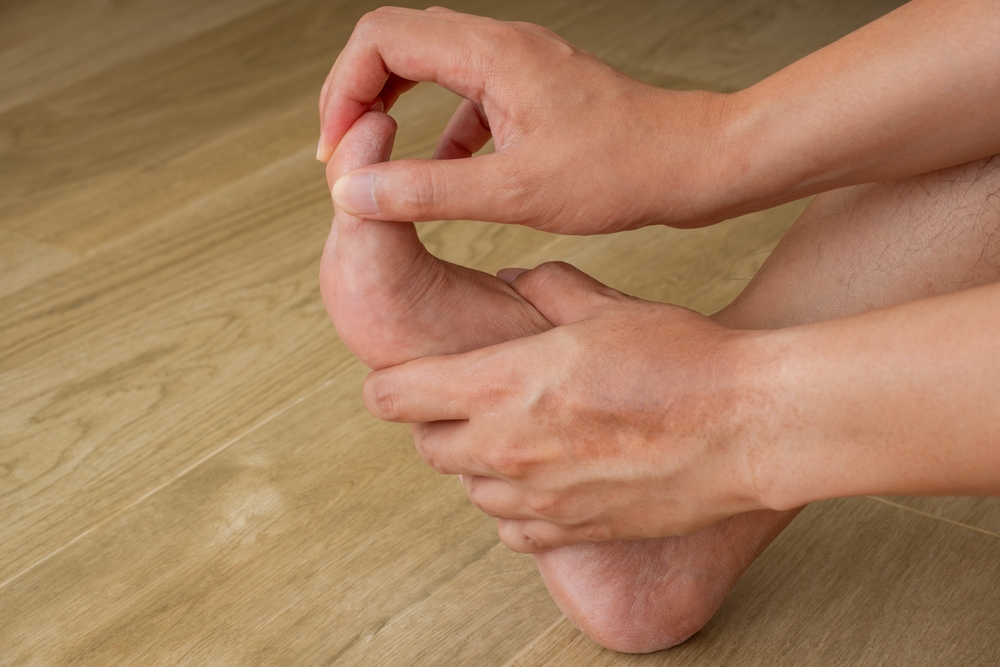
Cold, damp weather causes joint tissues to contract and barometric pressure to drop, which allows swollen tissue around the big toe joint to expand and press on nerves. Conditions like gout, hallux rigidus, and bunions make this joint especially sensitive to these changes. A podiatrist can identify the true cause and offer relief.
You feel it before you even check the forecast. A dull, nagging ache settles into your big toe joint, and somehow you already know rain is on the way. It is not your imagination. Many people notice their big toe joint aching only in rainy, cold weather, and there is a real physical reason behind it.
This pattern can feel frustrating, especially when the ache interrupts your daily routine or makes walking uncomfortable. Understanding what is happening in your joint and why weather seems to trigger it is the first step toward finding relief.
Why Does Your Big Toe Joint Ache Only in Rainy Cold Weather?
Your joints contain nerve endings that respond to changes in temperature and air pressure. When cold weather sets in, the tissues around your big toe joint contract slightly. At the same time, dropping barometric pressure before rain allows fluid and swollen tissue in the joint to expand. Together, these changes put extra pressure on sensitive nerves, and that pressure is what you feel as pain.
If you already have an underlying issue in the joint, this effect becomes much more noticeable.
Common Causes of Big Toe Joint Pain in Cold Weather
Gout
Gout develops when uric acid crystals build up in a joint, most often the big toe. Cold weather can slow circulation, which allows these crystals to settle and trigger sudden, sharp flare-ups.
Hallux Rigidus (Big Toe Arthritis)
Hallux rigidus is a form of arthritis that stiffens the big toe joint over time. Cold temperatures cause joint fluid to thicken slightly, which can make an already stiff joint feel even more restricted and sore.
Bunions
A bunion is a bony bump that forms at the base of the big toe. Swelling around a bunion tends to increase in damp, cold conditions, adding pressure to nearby nerves and tissue.
How Weather Affects Joint Pain
Weather does not cause these conditions, but it does intensify them. Cold temperatures reduce blood flow to your extremities, including your feet. Less blood flow means less warmth and flexibility in the joint. Falling barometric pressure, common right before rain, reduces the pressure pushing against your joint tissues from the outside, allowing them to expand and press on nerves. This combination explains why so many people notice joint pain rising right along with the humidity.
When Should You See a Podiatrist?
Occasional discomfort during a cold front is common. Persistent or worsening pain is not something you have to accept as normal. Consider reaching out to a podiatrist if you notice:
- Pain that lingers beyond a day or two after the weather clears
- Swelling or redness around the joint that does not go down
- Stiffness that limits your ability to walk comfortably
- Sudden, intense pain, which can signal a gout flare that needs prompt treatment
A podiatrist can examine your joint, review your symptoms, and determine whether gout, hallux rigidus, bunions, or another condition is behind your pain.
How a Podiatry Clinic in Brooklyn Can Help
If you live in the area, a podiatry clinic in Brooklyn can offer timely evaluation and a clear path forward. A podiatry clinic in Brooklyn will typically assess your joint mobility, ask about your symptom patterns, and may recommend imaging to confirm what is happening beneath the surface. From there, your treatment plan might include anti-inflammatory care, custom orthotics, or targeted therapy designed to ease pressure on the joint.
You Do Not Have to Wait Out Every Storm in Pain
Living around the weather forecast is exhausting, especially when your own body becomes the early warning system. That is not something you need to manage alone.
Our podiatry team works with patients and families to uncover the real cause of joint pain, whether it stems from gout, arthritis, bunions, or another condition entirely. Reach out to us today by calling +1-718-367-2555 or visiting us at 1797 Pitkin Avenue, Brooklyn, NY 1121 to schedule an evaluation and take the first step toward moving through every season with more comfort and confidence.