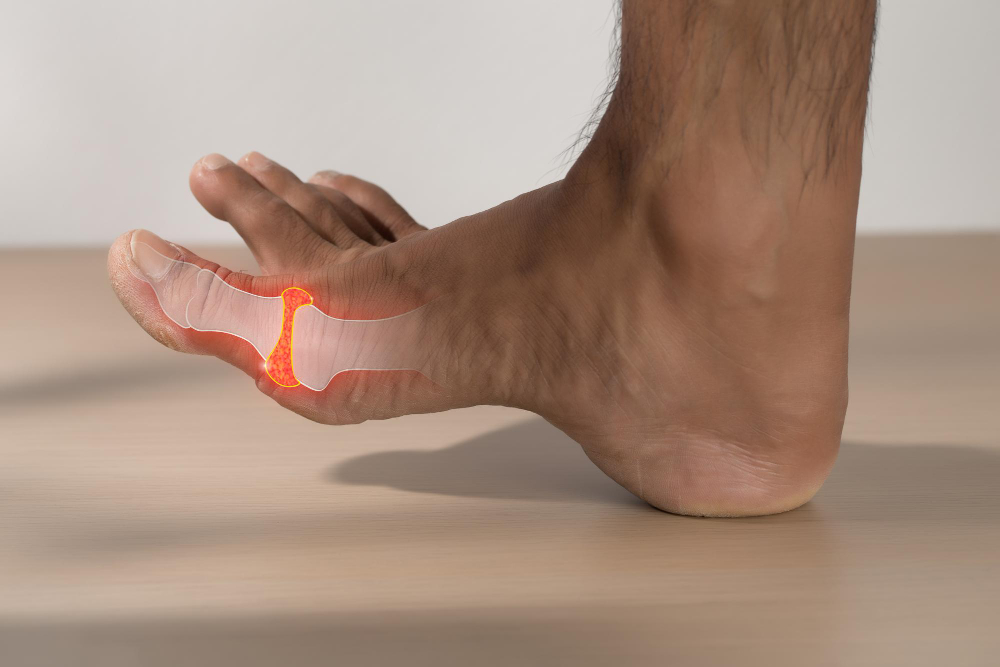
Lisfranc midfoot sprains occur when the ligaments connecting the midfoot bones stretch or tear, often after a twist, fall, or heavy impact. Because the pain can feel mild at first, many people delay care. Left untreated, lisfranc midfoot sprains can shift the bones out of alignment and lead to chronic arthritis. A podiatrist can confirm the injury with imaging and guide you toward the right treatment before lasting damage sets in.
A sore, swollen midfoot after a fall or a hard landing is easy to dismiss as a minor sprain. For an aging parent or a loved one recovering from surgery, that kind of injury can carry more risk than it appears to on the surface. lisfranc midfoot sprains are notoriously easy to miss, even on an X-ray, and a delayed diagnosis can mean months of unnecessary pain.
This guide walks you through what causes lisfranc midfoot sprains, why the injury is so often overlooked, and how a podiatrist diagnoses and treats it. If your loved one’s foot pain is not improving the way you expected, you deserve clear answers.
What Causes Lisfranc Midfoot Sprains
The Lisfranc joint connects the bones of your midfoot to your toes, held together by a network of ligaments that keep your arch stable with every step. A sudden twist, a fall from a height, or direct impact to the top of the foot can stretch or tear these ligaments.
Common Triggers
- Falls at home: A misstep on stairs or an unexpected trip can twist the midfoot beyond its normal range.
- Sports injuries: Sudden pivots or a hard landing often strain the Lisfranc ligaments.
- Car accidents: The foot can be crushed or forced into an unnatural position during impact.
- Osteoporosis or weakened bones: Older adults with reduced bone density face a higher risk from even minor falls.
Understanding these triggers matters because many lisfranc midfoot sprains happen during everyday moments, not dramatic accidents.
Signs and Symptoms: Why Missing a Subtle Foot Joint Tear Leads to Chronic Arthritis
Swelling and bruising across the top of the foot are easy to mistake for a simple sprain. That assumption is exactly why lisfranc midfoot sprains go untreated so often, and why untreated cases can progress toward chronic arthritis.
Symptoms to Recognize
- Swelling across the midfoot: Often more widespread than a typical ankle sprain.
- Bruising on the sole: A distinctive sign that points toward a Lisfranc injury.
- Pain when bearing weight: Difficulty standing or walking normally.
- Visible widening or flattening of the midfoot: A sign the joint may have shifted out of place.
If these symptoms do not improve within a few days, it is time to have the foot evaluated by a podiatrist.
How Is a Lisfranc Injury Diagnosed and Treated?
A podiatrist typically starts with a physical exam, checking for tenderness and instability across the midfoot. Because Lisfranc injuries are frequently invisible on standard X-rays, your podiatrist may order weight-bearing X-rays, a CT scan, or an MRI to confirm the diagnosis.
Treatment Options
- Immobilization: A cast or walking boot allows mild sprains to heal without surgery.
- Physical therapy: Targeted exercises rebuild strength and stability once the foot has healed enough to bear weight.
- Custom orthotics: Support the arch and reduce strain during recovery and beyond.
- Surgical repair: For significant ligament tears or bone displacement, surgery realigns the joint and prevents long-term arthritis.
Choose conservative care if the ligaments are only mildly strained and imaging shows no bone displacement. Choose surgical repair if the joint has shifted out of place, since delaying treatment raises the risk of chronic arthritis.
You Do Not Have to Navigate This Alone
Watching a loved one struggle with foot pain that will not resolve is unsettling, especially when daily walking becomes difficult. You do not have to guess at what comes next.
Our podiatry team is here to provide an accurate diagnosis and a treatment plan built around your family’s needs. Whether your loved one needs imaging, bracing, or a conversation about surgical options, our podiatrist will walk you through every step in plain language. Reach out to us today by calling +1-718-367-2555 or visiting us at 1797 Pitkin Avenue, Brooklyn, NY 1121 to schedule an evaluation and protect against the long-term effects of a missed Lisfranc midfoot sprain.