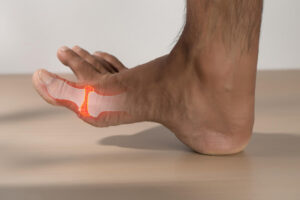
Peroneus brevis split tears happen when the tendon running along the outer ankle splits lengthwise, often after repeated ankle sprains or sudden twisting injuries. The pain can feel just like a sprained ankle, which is why many people delay care. A podiatrist can confirm the diagnosis with imaging and guide you toward the right treatment, from bracing to surgical repair.
You twisted your ankle, and the pain never fully went away. Weeks later, your outer foot still aches, especially when you walk on uneven ground or push off to start running. You assume it is just a stubborn sprain that needs more time. In many cases, though, the real cause is a peroneus brevis split tear, a condition that mimics an ankle sprain closely enough to go undiagnosed for months.
This guide explains what causes peroneus brevis split tears, the symptoms that set them apart from a typical sprain, and how a podiatrist diagnoses and treats this injury. If outer foot pain is slowing you down, understanding your options is the first step toward getting back on your feet.
What Causes Peroneus Brevis Split Tears
The peroneus brevis tendon runs along the outside of your ankle and helps stabilize your foot during walking, running, and sudden changes in direction. When this tendon is overstretched or repeatedly stressed, it can split lengthwise instead of tearing completely. This partial tear is what doctors call a split tear, and it often develops gradually rather than from one dramatic injury.
Common Triggers
- Repeated ankle sprains: Each sprain weakens the tendon a little more, making future tears more likely.
- Sudden twisting motions: Sports that involve quick pivots, like basketball or soccer, put heavy strain on the tendon.
- Structural foot issues: A naturally unstable ankle or high foot arch can increase pressure on the peroneus brevis tendon over time.
- Overuse: Runners and athletes who train frequently without adequate recovery face a higher risk of tendon breakdown.
Understanding these triggers matters because it helps explain why outer foot pain can linger long after a “simple” sprain should have healed.
Signs and Symptoms: Outer Foot Pain That Mimics an Ankle Sprain
Pain on the outer edge of your foot is easy to dismiss, especially if you remember twisting your ankle recently. That overlap in symptoms is exactly why peroneus brevis split tears are so often mistaken for ordinary sprains, and why they can go untreated far longer than they should.
Symptoms to Recognize
- Persistent outer ankle or foot pain: Discomfort that does not improve with typical sprain treatment like rest and ice.
- Swelling along the tendon path: Mild to moderate swelling behind the outer ankle bone.
- Weakness or instability: A feeling that your ankle may give out, particularly on uneven surfaces.
- Pain with specific movements: Discomfort when turning your foot outward or pushing off during walking or running.
If your pain has lasted more than a few weeks or keeps coming back, it is worth having it evaluated by a podiatrist rather than waiting it out.
How Is a Peroneus Brevis Tear Diagnosed and Treated?
A podiatrist typically begins with a physical exam, checking for tenderness along the tendon and testing your foot’s stability. Because split tears can be difficult to see on a standard X-ray, your podiatrist may recommend an MRI or ultrasound to get a clear picture of the tendon and confirm the extent of the tear.
Treatment Options
- Rest and immobilization: A brace or walking boot can take pressure off the tendon and allow early healing.
- Physical therapy: Targeted exercises rebuild strength and stability around the ankle once acute pain subsides.
- Anti-inflammatory care: Medication and icing help manage swelling and discomfort during recovery.
- Surgical repair: For more significant tears, a podiatrist may recommend surgery to repair the tendon and restore full function.
Choose conservative treatment if your tear is minor and your symptoms are improving with rest. Choose surgical repair if your pain persists despite therapy, or if imaging shows a larger split that is unlikely to heal on its own.
You Do Not Have to Keep Living With Outer Foot Pain
Lingering ankle pain is frustrating, especially when it does not behave like a normal sprain. You deserve an answer, not more guesswork.
Our podiatry team is here to help you get an accurate diagnosis and a treatment plan built around your activity level and goals. Whether you need bracing and physical therapy or a surgical consultation, our podiatrist will walk you through every option with clear, honest guidance. Reach out to us today by calling +1-718-367-2555 or visiting us at 1797 Pitkin Avenue, Brooklyn, NY 1121 to schedule an evaluation and start treating outer foot pain that mimics an ankle sprain before it holds you back any longer.