Subungual exostosis is a benign bone spur that grows beneath the toenail, usually on the big toe. It pushes the nail upward, causing pain, thickening, and nail lifting. A podiatrist can diagnose it with an X-ray and treat it through conservative care or minor surgery.
Finding a strange bump under your toenail can be unsettling. You might notice your toenail lifting, changing shape, or becoming painful to the touch, and wonder what is going on beneath the surface. In many cases, the cause is subungual exostosis: a benign bone spur growing under the nail bed.
This condition is more common than most people realize, especially among young, active individuals and those who have experienced repeated trauma to the toe. While the name sounds alarming, subungual exostosis is not cancerous and is very treatable. Understanding what causes it, how it is diagnosed, and when to see a podiatrist can help you get back to pain-free walking sooner.
What Causes a Bone Spur Under the Toenail?
Subungual exostosis develops when extra bone tissue forms at the tip of the toe, usually the big toe, and grows upward beneath the nail plate. As the bony growth expands, it has nowhere to go but up, forcing the nail to lift away from the nail bed.
Common Triggers
- Repeated trauma: Stubbing your toe, tight shoes, or high-impact activities like running and dancing can irritate the bone and trigger abnormal growth.
- Chronic pressure: Ill-fitting footwear that presses on the toe over time can contribute to bone spur formation.
- Infection or inflammation: In some cases, an underlying infection in the nail bed can prompt the bone to react and overgrow.
- Genetics: Some people are simply more prone to bone spurs due to inherited foot structure.
What Are the Signs You Should Watch For?
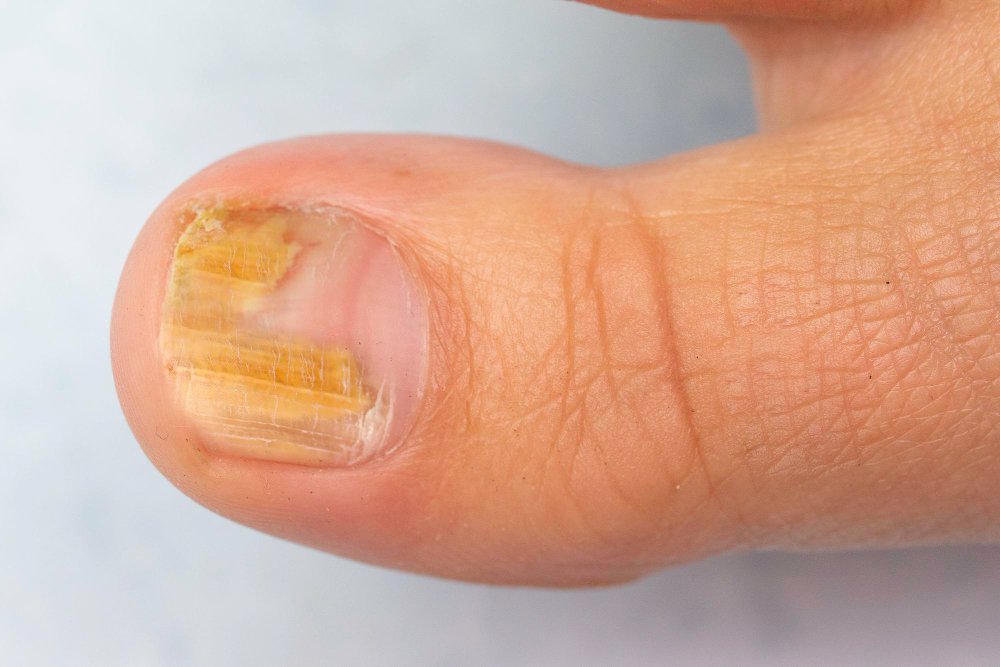
Subungual exostosis often looks like a stubborn ingrown toenail or a wart at first glance, which is why it is frequently misdiagnosed. Your loved one, or you, might notice the nail gradually separating from the skin underneath, along with visible thickening near the tip of the toe.
Symptoms to Recognize
- Nail lifting or detachment: The toenail begins separating from the nail bed, often starting at the tip.
- Visible lump or firmness: A hard bump forms beneath the nail, distinct from soft tissue swelling.
- Pain with pressure: Wearing shoes or walking becomes uncomfortable as the spur presses against the nail.
- Nail discoloration or deformity: The nail may thicken, discolor, or grow unevenly as the bone pushes against it.
If you notice these changes, it is worth having the area examined rather than waiting to see if it resolves on its own.
How Is Subungual Exostosis Diagnosed and Treated?
A podiatrist can typically identify subungual exostosis through a physical exam and a simple X-ray, which clearly shows the bony growth beneath the nail. Early diagnosis matters because it rules out other causes, like infection or, rarely, a more serious growth, and opens the door to effective treatment.
Treatment Options
- Conservative care: Padding, shoe modifications, and activity changes can relieve pressure while the podiatrist monitors the spur.
- Minor surgical removal: For persistent or painful cases, a podiatrist can remove the bone spur in a straightforward outpatient procedure, allowing the nail to heal and regrow normally.
- Follow-up care: Proper wound care and footwear guidance help prevent the spur from returning.
Choose conservative care if the spur is small and only mildly uncomfortable. Choose surgical removal if the nail is significantly lifted, pain persists, or the bump keeps growing despite footwear changes.
You Do Not Have to Live With Toenail Pain
A lifted, painful toenail can make every step feel like a burden, but you are not alone. Subungual exostosis is a well-understood condition, and relief is within reach with the right care plan.
Our podiatry team is here to help you get an accurate diagnosis and a treatment plan built around your life. Whether you need conservative guidance or a minor procedure, our podiatrist will walk you through every step with clear explanations and compassionate support. Reach out to us today by calling +1-718-367-2555 or visiting us at 1797 Pitkin Avenue, Brooklyn, NY 1121 to schedule an evaluation and take the first step toward pain-free toes.