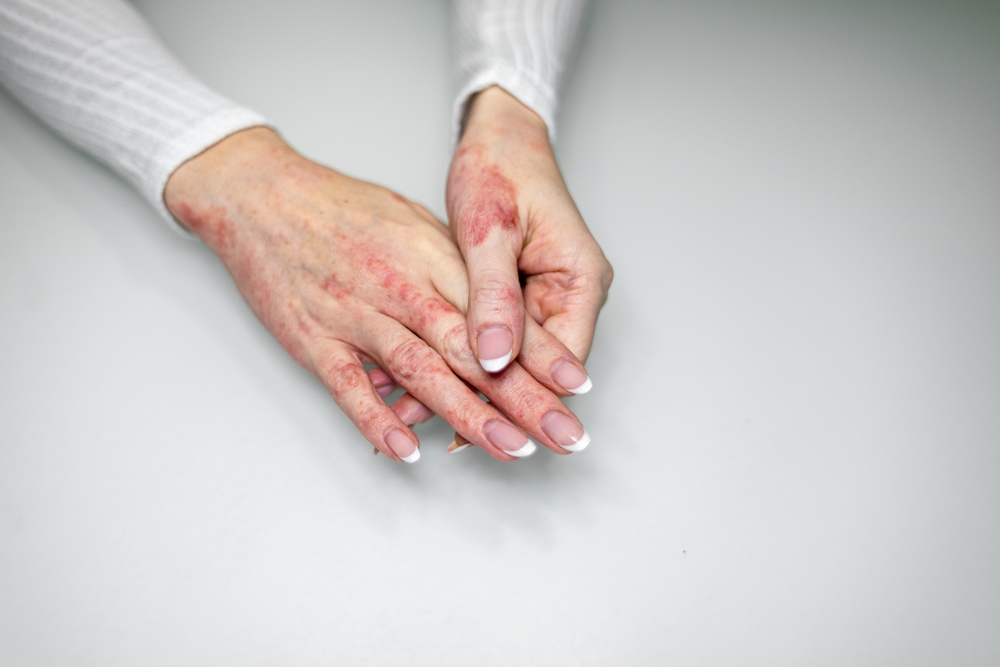
Nighttime eczema flares happen because your body’s natural cortisol levels drop after dark, skin loses more moisture, and body heat rises under blankets, all of which intensify itching. Skin allergies often make this worse by triggering histamine release. An allergist can identify your specific triggers and help you build a nighttime routine that breaks the scratch cycle.
Watching your child, or yourself, scratch through the night is exhausting. You lie awake listening, wondering why the itching seems to disappear during the day and return the moment the lights go off. If you are dealing with skin allergies and eczema, this pattern is not your imagination. There is a real biological reason why nighttime scratching flares up, and understanding it is the first step toward calmer, more restful nights for your whole family.
Why Does Nighttime Scratching Flare Up With Eczema and Skin Allergies?
Several changes happen in your body after the sun goes down, and each one can make itchy skin worse.
Your Body’s Natural Rhythms Shift
Cortisol, a hormone that helps control inflammation, naturally drops in the evening. According to the National Eczema Association (2023), lower cortisol levels at night reduce your body’s ability to suppress inflammation, which allows itching to intensify.
Your Skin Loses More Moisture
Skin loses water at a faster rate overnight, leaving it drier and more prone to irritation. Dry skin has a weaker barrier, so allergens and irritants penetrate more easily and trigger a stronger itch response.
Body Heat and Blood Flow Increase
Warmth under blankets raises skin temperature and blood flow, both of which worsen itching. Many parents notice their child kicks off covers repeatedly, a sign the body is overheating.
There Are Fewer Distractions
During the day, activities keep your mind occupied. At night, with nothing to distract you, the itch becomes the only sensation your brain is focused on, making it feel far more intense.
What Triggers Nighttime Eczema Flares?
Identifying your specific triggers can help you take action before the itching starts.
- Bedding materials: Rough fabrics or synthetic sheets can irritate sensitive skin.
- Dust mites: These common allergens thrive in mattresses and pillows and are a frequent cause of nighttime skin allergies.
- Pet dander: If pets sleep in the bedroom, dander can settle into fabric and trigger flares.
- Hot showers before bed: Hot water strips natural oils, leaving skin drier overnight.
- Certain fabrics or detergents: Fragrances and harsh chemicals in laundry products often irritate eczema-prone skin.
When Should You See an Allergist or Immunology Clinic in Brooklyn?
If nighttime scratching is disrupting sleep for more than a few weeks, it is worth seeking professional guidance. An allergist can run tests to pinpoint exactly which allergens are contributing to your flares, whether that’s dust mites, pet dander, or something in your diet. A visit to an immunology clinic in Brooklyn can also help rule out other conditions that mimic eczema, such as contact dermatitis or food-related allergic reactions.
Working with an allergist means you are no longer guessing. You get a personalized plan built around your specific triggers, not generic advice that may not apply to your situation.
You Do Not Have to Manage This Alone
Sleepless nights spent managing a loved one’s scratching take a toll on the whole family. You deserve real answers, not just another cream to try. Our Allergy team connects families with experienced allergists and home care support to help identify triggers, manage flares, and restore peaceful nights. Reach out to us today by calling +1-718-367-2555 or visiting us at 1797 Pitkin Avenue, Brooklyn, NY 1121 to talk through what your family is experiencing and find a plan that actually works for you.