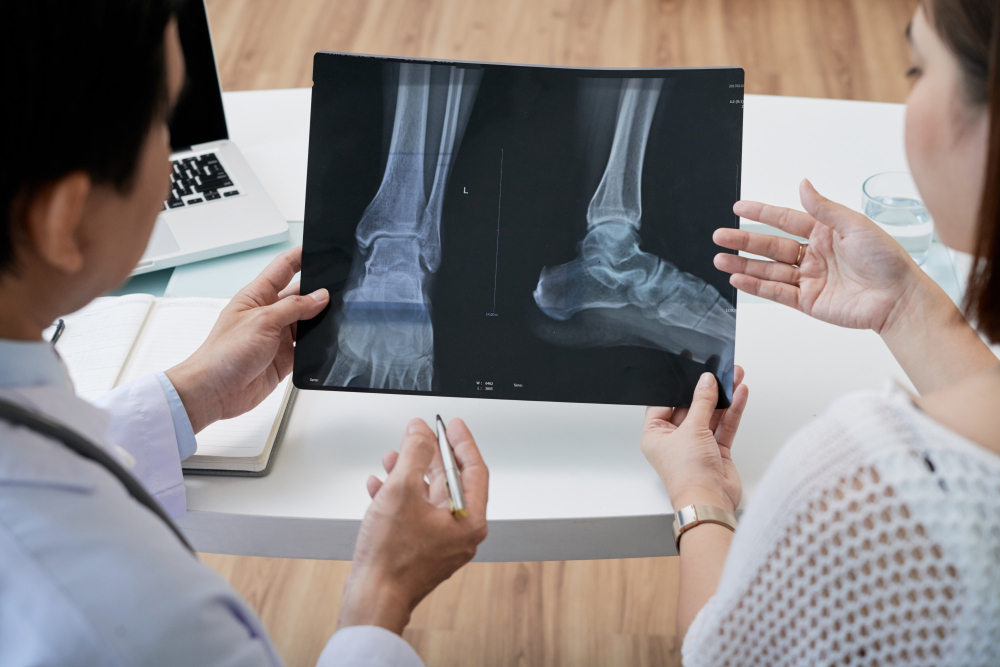
Subtalar joint fusion is a surgical procedure that permanently joins the bones of the subtalar joint to eliminate pain and restore walking stability after severe trauma. It is often recommended when arthritis, fractures, or instability make walking unbearable. A podiatrist evaluates imaging, pain history, and daily function to determine if fusion is the right path forward for you or your loved one.
Watching someone you love struggle to walk after a serious injury is hard. Every step looks painful, and the confidence they once had on their feet seems to fade a little more each day. If your loved one has faced a traumatic foot or ankle injury and still cannot move comfortably, subtalar joint fusion may be the answer you have been searching for. This procedure is designed to restore walking stability after severe trauma by stopping painful motion at the source. Below, we walk you through how it works, what the recovery process looks like, and who tends to benefit most.
How Subtalar Joint Fusion Restores Walking Stability After Severe Trauma
What the Subtalar Joint Does
The subtalar joint sits just below the ankle, connecting the talus and calcaneus bones. It allows your foot to roll side to side, which helps you balance on uneven ground. When this joint is damaged, even simple tasks like walking across a parking lot can become painful and unsteady.
When Fusion Becomes Necessary
Severe trauma, such as a fall or car accident, can crush or fracture the subtalar joint beyond repair. Over time, this damage often leads to arthritis and chronic instability. When bracing, physical therapy, and medication no longer relieve the pain, fusion becomes the next step toward lasting relief.
What to Expect from the Subtalar Fusion Procedure
The Surgical Process
During subtalar joint fusion, a podiatrist removes the damaged cartilage and joins the bones using screws or plates. Over several months, the bones grow together into one solid structure, eliminating the painful motion that once caused instability.
Recovery Timeline
Healing takes patience, but every stage brings your loved one closer to steady, confident steps. Most patients spend the first six to eight weeks in a cast or boot with no weight on the foot. Gradual weight bearing typically begins around week eight, with full recovery often taking four to six months. Your podiatry team will guide you through each phase so you always know what to expect next.
Who Is a Candidate for Subtalar Arthrodesis?
You do not have to guess whether this procedure is right for your family. A podiatrist can help you understand if subtalar arthrodesis fits your loved one’s needs. Common candidates include those with:
- Post-traumatic arthritis: Joint damage following a fracture or severe sprain that has not responded to conservative care.
- Chronic subtalar instability: Repeated ankle rolling or giving way that limits safe movement.
- Failed previous treatments: Bracing, injections, or physical therapy that no longer provide relief.
- Severe deformity: Misalignment of the foot that affects balance and daily function.
Take the Next Step Toward Stable, Confident Walking
You do not have to watch your loved one struggle with pain and instability any longer. Our podiatry team is here to evaluate their condition, answer your questions, and guide you toward the right treatment with care and clarity. If severe trauma has left a foot unstable, reach out to us today by calling +1-718-367-2555 or visiting us at 1797 Pitkin Avenue, Brooklyn, NY 1121 to schedule an evaluation and take the first step toward lasting relief.