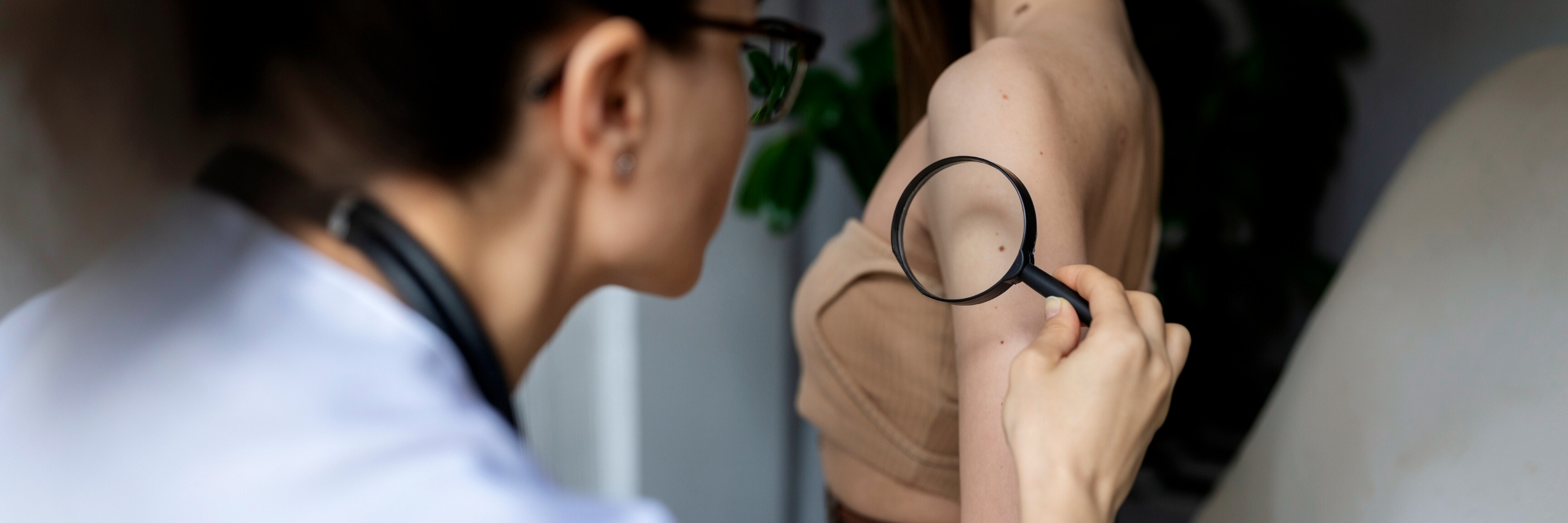
Finding a new bump, spot, or patch on your skin can be unsettling. You may wonder if it is harmless or a sign of something serious, and that uncertainty can weigh on you. Those worries are real, and you are not alone in having them. Here is the reassuring truth: most skin lesions are common, and learning to identify them puts real power back in your hands. Knowing the different types of skin lesions helps you describe what you see, understand what may be happening, and decide when to seek help. This skin lesion guide walks you through the primary and secondary types, what each one looks like, and when to see a dermatologist. By the end, you will feel more prepared and less alone in facing whatever appears on your skin.
Taking that first step is easier with a caring team beside you. Doral Health & Wellness Dermatology in Brooklyn offers thorough, compassionate skin care in a modern medical facility. Our specialists guide you through skin lesion identification, diagnosis, and treatment with clarity and support. Reach out today, and let us help you protect your skin and your peace of mind.
What is a Skin Lesion?
Spotting a change on your skin can spark immediate worry. You may fear the worst before you even know what you are looking at. Understanding the basics takes much of that fear away.
A skin lesion is any area of skin that looks different from the skin around it. It can be a change in color, texture, shape, or size. Lesions may appear anywhere on the body, and most are harmless.
Doctors sort skin lesions into two main groups. Primary skin lesions are present from the start, such as a mole or a blister. Secondary skin lesions develop later, often as a lesion changes, heals, or gets irritated.
Knowing which group a lesion belongs to helps you and your doctor find answers faster. That simple understanding is the first step toward clear, confident care.
Primary Skin Lesions: The Starting Point
Trying to describe a spot to your doctor can feel frustrating when you lack the words. You may struggle to explain exactly what you see. Learning the names of primary skin lesions gives you that language.
Primary lesions are the earliest form a skin change takes. Here are the most common types to recognize:
- Macules – Flat, small spots of changed color, less than about 1 centimeter wide. Freckles and flat moles are common examples. You can see them but not feel them.
- Papules – Small, raised bumps you can feel, usually less than 1 centimeter. Think of a small wart or a raised mole.
- Plaques – Raised, flat-topped areas larger than 1 centimeter. Plaques often appear with conditions like psoriasis and can feel rough or scaly.
- Vesicles – Small, fluid-filled blisters under 1 centimeter. You might see these with cold sores, chickenpox, or certain rashes.
- Pustules – Raised bumps filled with pus, like the whiteheads seen in acne. They often look yellow or white at the center.
- Nodules – Firm, raised bumps that extend deeper into the skin, larger and more solid than papules. Some cysts fall into this category.
- Wheals – Raised, itchy welts that come and go, often linked to hives or allergic reactions. They may change shape within hours.
Each type points your doctor toward a different set of possibilities. Naming what you see turns a worrying mystery into a clear starting point for care.
Secondary Skin Lesions: How Skin Changes Over Time
Watching a lesion change can be alarming. You may worry that a shift in color or texture means the problem is getting worse. Often, these changes are simply part of how skin responds and heals.
Secondary skin lesions form when a primary lesion evolves, from scratching, healing, infection, or time. Here are the common ones to know:
- Scales – Flakes of dry, dead skin that build up on the surface. You often see scaling with eczema, psoriasis, or fungal infections.
- Crusts – Dried patches of blood, pus, or fluid, commonly called scabs. These form as a wound or blister begins to heal.
- Ulcers – Open sores where the top layers of skin are lost, sometimes reaching deeper tissue. Ulcers can be slow to heal and deserve prompt attention.
- Scars – Areas of fibrous tissue that replace normal skin after an injury or deep lesion heals. Scars may be flat, raised, or sunken.
Noticing these changes is not cause for panic on its own. But when a lesion will not heal, keeps growing, or bleeds, that is your signal to reach out for expert help.
When to See a Dermatologist
Deciding whether a spot is worth a visit can feel confusing. You may not want to overreact, yet you fear missing something important. A few clear warning signs make that decision easier.
See a dermatologist if you notice any of the following:
- A changing mole or spot – Any lesion that changes in size, shape, or color over weeks or months.
- Uneven or irregular borders – Edges that look ragged, blurred, or asymmetrical.
- Sores that will not heal – A lesion that stays open, bleeds, or keeps coming back after a few weeks.
- New growths after age 30 – A new mole or bump that appears later in life deserves a professional look.
- Itching, pain, or bleeding – A lesion that itches persistently, hurts, or bleeds without clear cause.
An accurate diagnosis is the most important step toward peace of mind. A dermatologist can examine your skin, confirm what a lesion is, and rule out anything serious. When you search for dermatology Brooklyn care, look for a specialist experienced with a wide range of skin condition types and skin tones.
That kind of expert partnership turns uncertainty into a clear plan. You do not have to guess, and you do not have to wait in worry.
Protecting Your Skin Health
Your skin tells a story, and learning to read it puts you in control. You now understand what a skin lesion is, the difference between primary skin lesions and secondary skin lesions, and the warning signs that call for professional care. With this skin lesion guide and a trusted specialist, you can approach any new spot with confidence rather than fear.
Here are the key takeaways to remember:
- Primary lesions appear first, like macules, papules, and vesicles.
- Secondary lesions develop over time, such as scales, crusts, and scars.
- Warning signs like changing, bleeding, or non-healing spots mean it is time to see a dermatologist.
You do not have to face this alone. To get expert, compassionate care that puts your well-being first, contact Doral Health & Wellness today at 1-718-365-2555 or visit us at 1797 Pitkin Avenue, Brooklyn, New York 11212. Our dedicated team is ready to examine your skin, personalize your care, and support you at every step.
For general information about Doral Health & Wellness services, you can contact or email info@doralhw.org.