Watching a loved one push food around their plate, or refuse meals altogether, is one of the hardest parts of dementia caregiving. Appetite loss in dementia is common, and it rarely has one simple cause. Confusion at the table, trouble using utensils, and difficulty recognizing food can all play a role.
The good news is that small changes to how food looks and how it’s served can make a real difference. Finger foods and high-contrast plates are two of the most effective, low-cost tools for managing appetite loss in dementia. They reduce confusion, support independence, and make mealtime feel less overwhelming. A nutritionist can help you build a full plan, but you can start making changes at home today.
Why Does Dementia Cause Appetite Loss?
Appetite loss in dementia often has less to do with hunger and more to do with how the brain processes a meal. Your loved one may forget how to use a fork, struggle to recognize food as food, or feel overstimulated by a busy plate.
This is frustrating for everyone at the table. But understanding the cause points directly to the solution: simplify the meal, and the appetite often follows.
How Finger Foods Support Appetite Loss in Dementia
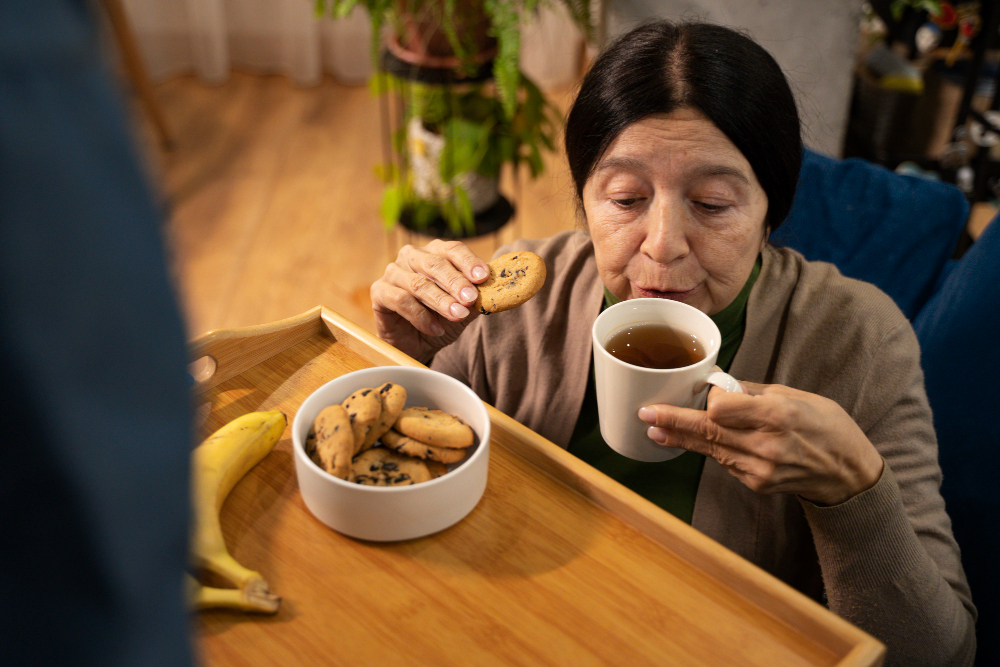
Finger foods remove a major barrier to eating: the utensil. When your loved one can pick up food with their hands, mealtime becomes simpler and less intimidating.
Finger foods help because they:
- Reduce frustration. No fumbling with a fork means fewer abandoned meals.
- Support independence. Your loved one can feed themselves longer, which protects dignity.
- Encourage grazing. Smaller, handheld portions feel less overwhelming than a full plate.
Good finger food options include:
- Cheese cubes and soft fruit slices
- Chicken strips or meatballs
- Sandwich quarters
- Steamed vegetable sticks
- Mini muffins or energy bites
What Are High-Contrast Plates and Why Do They Work?
High-contrast plates are a simple visual tool that makes food easier to see and recognize. As dementia progresses, your loved one may lose the ability to distinguish food from the plate it sits on, especially when colors are similar.
Research on dining and dementia has found that serving food on brightly colored, high-contrast plates can increase both food and fluid intake. A red plate under white rice stands out. A white plate under white mashed potatoes does not.
Tips for using high-contrast plates:
- Choose solid, bold colors like red or blue rather than patterns.
- Avoid white-on-white or pale-on-pale combinations.
- Use plain placemats so the plate itself stands out from the table.
Combining Finger Foods and High-Contrast Plates
Finger foods and high-contrast plates work best together. A colorful plate helps your loved one notice the food, and the finger food format helps them act on that recognition without needing to manage utensils.
Try this simple approach at mealtime:
- Serve two or three finger foods at a time, not a full plate at once.
- Place them on a bold, solid-colored plate.
- Offer one food at a time if your loved one seems overwhelmed by choices.
- Sit with them, since your presence alone can encourage eating.
When to Involve a Nutritionist
If appetite loss continues despite these changes, or if you notice weight loss, it may be time to bring in extra support. A nutritionist can assess whether nutritional needs are being met and recommend fortified foods or supplements if needed. Working with a nutritional consultant in Brooklyn also means someone is tracking intake over time, not leaving you to guess whether the changes are working.
You Do Not Have to Navigate This Alone
Appetite loss in dementia is upsetting to watch, but small, practical changes can restore some comfort to mealtime. If you need a tailored plan, our Nutrition team is ready to help you support your loved one’s eating habits. Reach out to us today by calling +1-718-367-2555 or visiting us at 1797 Pitkin Avenue, Brooklyn, NY 1121 to get started.